


























Boulder Solution

Eric_HeadShot-scaled
Head Engineer | Co-Founder

Eric Klumper

Cutting edge med device design. No Bloat.
We bridge the gap between clinical need and commercial reality with absolute regulatory integrity.

WANT IT TO SOUND PLAYFUL, LUXURIOUS, OR MORE/

End to-end contract design and manufacturing (CDMO) for the risk-averse.

Our approach is straightforward— We engineer bold, defensible regulatory strategies that push your device through the FDA and into the field.

25 +

Years of experience

Explore how we transform ideas into extraordinary digital experiences.

1 + + products in the market

“We combine cutting edge design with precision engineering while -keeping both perfectly aligned with regulatory strategy – getting your project to make it 20% faster.”

Kelsey Lee  RAC- Devices Co-Founder

Follow us

For updates

Impressions

Regulatory

100%

Design

100%

Risk Tolerance Aversion

96%
Our Goal is Simple: To be the
best contract medical device design and engineering firm in Northeast, Ohio
Our Goal is Simple: To be the
best contract medical device design and engineering firm in Northeast, Ohio
1766434809001-019b47b7-29fd-755a-85a0-701cd0d7406c
Regulatory approval is not an afterthought; it is the foundation of our process. Led by RAC-certified experts, we construct...
precision
From pilot runs to high-volume automation. Our facilities operate under strict ISO 13485 protocols, utilizing advanced machining...
10085
Our Quality Management System is built to the highest global standards. Whether you need full QMS implementation or specific...
iso 13485
A broken QMS isn’t just a compliance risk—it’s a manufacturing bottleneck. We specialize in “Lean Compliance.” We build ISO...

Company expertise

Comprehensive Regulatory Strategy

Regulatory approval is not an afterthought; it is the foundation of our…
1766434809001-019b47b7-29fd-755a-85a0-701cd0d7406c.jpeg

Project Development & Precision Manufacturing

From pilot runs to high-volume automation. Our facilities operate under strict ISO…
precision

QMS Implementation & Project Management

Our Quality Management System is built to the highest global standards. Whether…

Regulatory & Quality Management System (QMS) Consulting

A broken QMS isn’t just a compliance risk—it’s a manufacturing bottleneck. We…
iso 13485

ISO 13485:2016 CERTIFIED | FDA REGISTERED | 21 CFR PART 820 COMPLIANT | ISO CLASS 7 CLEANROOMS

unnamed-2
fun facts

Consistently delivering impactful results through a perfect blend of design and functionality.

110
+

Successful projects in the market

download
unnamed-2
Lucid_Origin_A_partially_rendered_highly_detailed_3D_CAD_model_1-scaled

More than 125+ projects completed—each designed to deliver real-world results and withstand for years to come.

Quality

We offer end-to-end engineering that pushes limits but don’t break boundaries.

Worldwide base
around the world

1
+

eric klumper

From the Founder’s Desk

“We don’t just build medical devices; we engineer confidence. Our mission is to bridge the gap between clinical innovation and commercial reality, ensuring no great idea fails due to avoidable manufacturing errors.”

Eric_HeadShot-scaled
Head Engineer | Co-Founder

Eric Klumper

get in touch

Tell us about your project —whether you just put together a wireframe or have a prototype ready to go.

talk to us

Work and general inquiries
+1 303-667-3002

post address

Rocky River,
 OH 44116,
 United States

Have a project in mind?

home1-bg-img12
get rewards

WANT IT TO SOUND PLAYFUL, LUXURIOUS, OR MORE/

Driven by passion and grounded in expertise, our team turns bold ideas into reality, leading the way in creative innovation.

best designer awards
awwwards
2025
peaky ui designer
google
2024
great in ux
apple
2023
best website pick
microsoft
2022
nelson ui & ux designer
samsung
2021
our avengers

Meet our team

What began over coffee-fueled brainstorming sessions has grown into a thriving contract medical device manufacturing and consulting practice dedicated to helping get your project to market with minimal stress.

Eric Klumper

founder | head engineer

Kelsey Lee

Founder | Head of Regulatory Affairs

faq & get answer

Technical FAQ

Haven’t found what you’re looking for yet? Feel free to ask anything. Let’s Talk

Founder-Led
Do you handle Class III devices?
Lucid_Origin_A_partially_rendered_highly_detailed_3D_CAD_model_1-scaled
Yes. We specialize in Class II and III devices requiring 510(k) or PMA submission.
get in touch
Can you rescue a stalled project?
float
Absolutely. Our 'Recovery Protocols' are designed to audit existing designs, fix compliance gaps, and get you back on track.
get in touch
What CAD software do you use?
home-9-service-img3
We are able to work with a number of CAD software variations depending on what your project requires.
get in touch
Do you offer sterilization services?
We manage the entire sterilization validation process (EO, Gamma, E-Beam) through our qualified partner network.
get in touch

The regulatory landscape for medical devices is shifting. For 2026, the FDA tightens expectations, particularly regarding documentation, inspections, and oversight of AI-enabled devices. Medical device manufacturers, especially startups, must respond decisively. This guide breaks down what’s changed, why immediate action is critical, and how to prioritize workstreams for regulatory compliance.

We’ll provide a direct summary of crucial updates. This includes the Quality Management System Regulation (QMSR) timeline and expectations for AI/Software as a Medical Device (SaMD). You’ll find step-by-step audit preparation strategies, which can lower the risk of Form 483 findings. Also covered are practical documentation standards, aligning with ISO 13485 and ISO 14971.

Regulators increasingly value risk-based records, continuous performance monitoring, and robust traceability across the entire product lifecycle—from design to post-market surveillance. Below, we outline how to update technical files, risk management, and internal audits first.

Checklists, clear summary tables, and actionable task lists map inspection types to pre-inspection actions, helping your team prepare efficiently. Follow these recommendations. Align procedures, evidence, and training to 2026 expectations. Reduce friction during FDA audits and inspections.

What are the key updates in FDA medical device regulations for 2026?

In 2026, the FDA emphasizes a significant transition: the Quality Management System Regulation (QMSR) framework. Expect tighter controls on AI-enabled medical devices, broader acceptance of real-world evidence (RWE), and shifts in user-fee and inspection priorities. The old paper-centric record-keeping model is out. The new focus: demonstrable, risk-based processes, ongoing monitoring, and verifiable post-market performance.

These changes also push for alignment with international standards like ISO 13485. Understanding these updates helps manufacturers prioritize which documents need attention first. It also shows how to map existing QMS artifacts to these new expectations. The summary below highlights the principal changes and their practical impact for teams managing submissions and regulatory affairs.

Key regulatory changes and their near-term impacts:

QMSR transition and ISO 13485 alignment: Stronger emphasis placed on risk-based processes, supplier oversight, and comprehensive lifecycle evidence.

AI/SaMD guidance: Clearer expectations for algorithm provenance, robust monitoring plans, and transparency for adaptive models are now in place.

RWE acceptance: Expect greater use of structured real-world performance data to support safety and effectiveness claims.

User-fee and inspection priorities: Resources have shifted. High-risk technologies and targeted post-market surveillance audits are now priorities.

Regulatory Area             Change                                                    Practical Impact                                                                                  
QMSR alignment              Risk-based QMS emphasis, clear implementation timelines   Revise SOPs, traceability matrices, and supplier controls. Show documented, risk-based decisions.
AI/SaMD guidance            Documentation for model training, monitoring, and updates Maintain model cards, monitoring logs, and update justifications for adaptive algorithms.        
Real-World Evidence         Expanded acceptance in submissions                        Capture structured post-market data. Integrate RWE into PMS and labeling when appropriate.       
Inspection focus            Targeted inspections for high-risk and AI-enabled devices Assemble evidence bundles and rapid-response records for targeted audits.                         

This concise table pinpoints where to direct efforts. Align your quality management system outputs to risk profiles. Document AI lifecycles fully. Build out RWE capture mechanisms. Prepare inspection-ready evidence bundles for your priority products. Next, we examine how QMSR relates to ISO 13485 and which documents demand immediate updates.

How does the QMSR align with ISO 13485:2016 for compliance?

QMSR and ISO 13485 share foundational principles. Both demand a documented, risk-based quality management system across the entire medical device lifecycle. However, QMSR introduces a distinct U.S.-specific emphasis on inspection readiness and demonstrable post-market evidence.

The frameworks largely converge on design controls, robust supplier management, and corrective and preventive action (CAPA) processes. But QMSR explicitly requires clear, auditable decisions linked to risk assessments, alongside faster, verifiable corrective actions.

Practical steps? Perform a clause-by-clause gap analysis. Prioritize high-risk processes for immediate remediation. Crucially, capture sample-based evidence. This proves consistent application of your risk controls. Transitioning from ISO 13485 to QMSR should prompt teams to focus on measurable outcomes and enhanced traceability. This directly informs which documents need updating under the new regulations.

What new documentation requirements must medical device manufacturers meet?

Medical device manufacturers now face expanded requirements for technical files, post-market surveillance plans, and AI/SaMD records. Documentation must include provenance, performance metrics, and continuous monitoring strategies. Critically, clear traceability from design inputs to post-market outcomes is expected.

You will need to update Device Master Records (DMR), Design History Files (DHF), Device History Records (DHR), risk management files (aligned to ISO 14971), and CAPA records. These must now capture risk-based rationale and solid evidence of ongoing effectiveness.

Start with documents tied to safety-critical functions and AI decision pathways. Then, update supplier agreements and traceability matrices. This ensures data lineage and post-market sources are fully accounted for.

A compact table highlights essential regulatory documents and quick update actions:

Document Required Elements Under 2026 Updates Practical Tips
DHF Design decisions; verification & validation (V&V) tied to risk Add traceability to risk controls and V&V evidence.
DMR Manufacturing specifications and supplier controls Update supplier qualification records and incoming inspection criteria.
DHR Batch/device-level production records Ensure serial-level traceability. Maintain a robust deviations log.
Risk Management File ISO 14971 risk analyses, mitigation records, monitoring Link risk controls to PMS signals and CAPA effectiveness metrics.
Post-Market Plan RWE sources, monitoring metrics, update strategy Define data sources and review frequency for performance metrics.

Updating these core documents ensures your inspection-relevant records are immediately available. Next, we detail how to prepare for FDA audits that will scrutinize these very artifacts.

How to prepare effectively for FDA audits in 2026?

Effective FDA audit preparation for 2026 demands a structured, step-by-step plan. This goes from pre-inspection readiness right through to closure. Inspectors will specifically look for evidence of risk-based decisions, readily retrievable records for AI models, and proven CAPA processes.

Begin by verifying document completeness. Identify your high-risk product lines. Then, assemble an inspection-ready binder or electronic evidence bundle, mapped directly to likely inspection focuses. Combine role-based staff training with documented mock inspections. 

Have a clear plan ready to address any observations. This reduces the chance of Form 483 citations and shortens response cycles. Below is a pre-inspection checklist, mapped to common inspection types, and a procedural checklist for quick reference.

Pre-inspection checklist mapped to inspection types:

Inspection Type Key Focus Areas Pre-inspection Checklist Items
Routine surveillance QMS processes, CAPA, supplier controls Verify SOPs, recent internal audits, CAPA records, and the traceability matrix.
For-cause inspection Specific complaint or field action Assemble complaint investigations, field corrective actions, and root-cause analyses.
Pre-approval inspection (PAI) Design verification/validation, manufacturing controls Prepare DHF excerpts, V&V reports, device control records, and validation protocols.
Post-market surveillance audit RWE, PMS data, trend analysis Compile PMS reports, vigilance data, monitoring plans, and model performance logs.

This mapping helps teams focus preparation efforts precisely on the evidence auditors will request. The next sections define different inspection types. We also cover how to respond effectively to observations, should they occur.

What are the types and processes of FDA inspections for medical devices?

FDA inspections fall into several key categories: routine surveillance, for-cause inspections, pre-approval inspections (PAI), and follow-up audits. Each generally follows a similar process, beginning with a notice (if applicable), an opening meeting, document review, a site tour, staff interviews, and finally, a close-out discussion. Routine inspections aim to assess overall quality management system effectiveness, CAPA processes, and supplier management.

PAIs, on the other hand, hone in on design verification and validation (V&V) and manufacturing controls directly tied to a specific submission. For-cause inspections investigate complaints, adverse events, or other triggers arising from external intelligence. 

Common auditor requests often include DHF excerpts, DMR/DHR records, complete CAPA files, supplier qualifications, and objective evidence demonstrating the effectiveness of corrective actions.

Preparation means not only organizing evidence by function, but also ensuring subject matter experts are available and prepared for interviews. This naturally leads to guidance on how to respond to Form 483 findings.

How to respond to FDA Form 483 observations and findings?

A robust Form 483 response begins with immediate containment, followed by a thoroughly documented root-cause analysis. Crucially, a structured CAPA plan must be developed, detailing timelines, accountable owners, and measurable effectiveness. Keep the response factual. Cite specific evidence.

Avoid any speculative language. Include a concise template: a summary of observations, immediate containment steps, the root-cause analysis method and its findings, a CAPA plan with clear milestones, and verification of effectiveness.

 A timely, evidence-backed response, one that demonstrates measurable remediation, substantially improves the chance of a favorable regulatory assessment. It can also reduce the likelihood of escalation to a warning letter.

Consider running mock Form 483 scenarios during your internal audits. This practice improves response speed and overall quality. The next major section discusses the specific documentation standards required to support these responses.

What are the new medical device documentation standards and best practices?

Updated medical device documentation standards prioritize structured traceability, verifiable data provenance, and consistent version control across all quality management system artifacts. 

This ensures auditors can quickly trace design decisions to risk mitigations and post-market outcomes. Best practices include developing modular technical files that clearly map requirements to verification results.

Centralized electronic document control systems with robust audit trails are essential. Risk-based retention policies, which prioritize high-impact records, should be implemented. 

Standardized templates for DHF, DMR, DHR, CAPA, and risk files reduce variability, which in turn speeds up audit responses. The following list highlights essential QMS documents under the updated regulations:

1.  Design History File (DHF): Must include traceability matrices, all V&V results, and comprehensive design decision logs.

2.  Device Master Record (DMR): Document all manufacturing specifications, change controls, and supplier requirements.

3.  Device History Record (DHR): Maintain serial/batch-level production records, test results, and deviation reports.

4. Risk Management File: Keep ISO 14971-aligned analyses, mitigation records, and ongoing monitoring plans updated.

These documents form the backbone of your inspection evidence. The table below serves as a quick reference to guide your updates.

Document (Entity) Required Elements (Attribute) Practical Tips / Examples (Value)
DHF Traceability, V&V reports, design changes Use a master traceability matrix linking requirements to V&V evidence.
DMR Specs, BOM, supplier specs Keep supplier certificates and incoming inspection logs in the DMR.
DHR Batch records, test signatures Implement serialized DHRs. Link records directly to nonconformance logs.
CAPA Investigation, action plan, verification Record interim containment measures. Provide clear evidence of effectiveness.
Risk File Hazard analysis, residual risk, monitoring plan Connect PMS signals and monitoring metrics to each risk control.

Standardizing these artifacts not only reduces audit friction but also strongly supports continuous monitoring efforts. Now, let’s look at how to practically maintain technical files and risk documentation.

Which quality management system documents are essential under updated regulations?

Under QMSR and ISO 13485 alignment, certain quality management system documents are absolutely essential. 

These include: SOPs for design control, detailed supplier management procedures, ISO 14971 risk management files, robust CAPA procedures, comprehensive change-control logs, and documented validation protocols for both software and manufacturing processes.

Each document must show evidence of actual implementation—think signed reviews, complete version histories, and checks of effectiveness—not merely exist as a template. 

Prioritize documents tied to safety-critical functions, high-risk suppliers, and any adaptive algorithms, as these areas will undoubtedly receive greater scrutiny. A prioritized update schedule, starting with the DHF and risk files, helps demonstrate rapid remediation and overall readiness.

How to maintain technical files and risk management documentation?

Maintain your technical files with a modular folder structure. Implement clear versioning. Crucially, use living traceability matrices that link design inputs directly to testing and post-market data. 

We often recommend a folder layout that distinctly separates design, production, and post-market evidence. Include a central index listing version, author, and approval dates; this speeds auditor navigation.

Treat risk management as a living, dynamic process. Trigger reviews whenever post-market surveillance (PMS) data reveals new trends. Document retraining or CAPA actions. Always include effectiveness checks. For algorithm models, use audit trails and immutable logs, capturing data provenance to demonstrate continuous regulatory compliance.

Continuously linking risk artifacts to PMS data ensures inspectors can easily follow the entire product lifecycle connection. The next section outlines specific regulatory expectations for AI-enabled medical devices in 2026.

How do FDA regulations address AI-enabled medical devices in 2026?

The FDA’s expectations for AI-enabled medical devices in 2026 largely focus on algorithmic transparency, continuous monitoring, and measurable performance metrics. These metrics must clearly demonstrate both safety and effectiveness in real-world usage. 

Manufacturers are expected to provide thorough documentation of training datasets, along with “model cards” that precisely state the intended use and known limitations of the algorithm.

Validation against representative datasets is critical. Post-deployment monitoring plans must be robust, designed to detect any drift, bias, or degradation in performance. Cross-jurisdictional alignment, especially with frameworks like the EU AI Act, is also highly relevant for global market access.

Dual jurisdictions often demand overlapping evidence and consistent governance. Clear, auditable documentation of algorithmic decisions and monitoring reduces regulatory uncertainty and strengthens your submissions considerably.

The following subsections compare FDA guidance with EU AI Act obligations and detail practical documentation for algorithmic models.

What are the FDA guidance and EU AI Act requirements for AI medical devices?

FDA guidance prioritizes transparency, validation, and monitoring—all proportionate to the device’s inherent risk. The EU AI Act, however, tends to classify many medical AI systems as “high-risk.” This triggers requirements for formal conformity assessments, comprehensive technical documentation, and stringent governance measures.

In practice, FDA reviewers typically expect detailed model performance metrics, explicit intended-use statements, and clear PMS plans. The EU, on the other hand, adds explicit technical documentation requirements, alongside specific risk management and human oversight mandates for these high-risk systems. For dual compliance, manufacturers should harmonize their evidence.

Combine model cards, risk analyses, and monitoring protocols. This makes materials reusable across both agencies wherever possible, streamlining regulatory affairs.

Harmonized documentation directly informs the practical approach for capturing algorithmic decision-making and continuous monitoring in submission-ready formats.

How to document algorithmic decision-making and continuous monitoring?

Document algorithmic decision-making meticulously. Use “model cards” to record architecture, training-data provenance, performance metrics, intended use, and limitations. Maintain versioned update logs and regular drift-detection reports. Monitoring plans must define clear metrics. Consider sensitivity, specificity, or latency.

Establish thresholds that trigger retraining. Outline human-override procedures. Provide representative validation datasets, or robust statistical summaries. A clear dataset provenance statement, showing lineage from original source to training set, is non-negotiable. Together, these artifacts create an auditable trail, linking model updates directly to risk assessments and ongoing post-market checks.

Clear model documentation and robust monitoring satisfy both transparency expectations and the need for continuous risk control. The next section explores the broader operational impacts of these updates.

What impact do regulatory updates have on medical device manufacturers?

These FDA regulation updates significantly affect several core operational areas: design controls, the depth of verification and validation (V&V) efforts, supplier oversight, and internal audit practices. Consequently, medical device manufacturers must reallocate resources toward evidence generation, comprehensive model governance for AI/SaMD, and continuous post-market monitoring.

Organizations will require stronger supplier qualification processes, more robust incoming inspection procedures, and clearer documentation of risk-based decisions across the entire product lifecycle. Successful implementation usually involves a phased roadmap, cross-functional governance, and targeted training to build competence in these new inspection priorities. The subsections below detail how design and manufacturing processes will change, alongside recommendations for training and internal audit practices.

These operational impacts directly lead to specific changes in design and manufacturing processes, which we’ll cover next.

How do changes affect design, development, and manufacturing processes?

Design and development processes will demand deeper verification and validation evidence. Expect tighter supplier controls. Critically, traceability must now link design inputs directly to field performance and CAPA outcomes. Verification for software and AI components must include representative datasets and relevant test environments.

Validation, in turn, must demonstrably prove real-world performance against clearly defined acceptance criteria. Manufacturing controls should incorporate enhanced incoming inspection, robust change-control records (documenting clear rationale), and explicit process capability metrics. 

A phased roadmap—assess, prioritize, remediate, monitor—offers the most effective approach for teams to meet these timelines without disrupting ongoing production.

Strengthening these processes increases the need for role-specific training and more frequent internal audits, as described next.

What training and internal audit best practices support compliance?

Training should be highly role-specific and thoroughly practical. Topics might include auditor competency, the fundamentals of AI governance, and effective evidence assembly for inspections. Tie your refresher training cadence directly to process risk and ongoing regulatory changes.

Internal auditors, especially, must meet ISO 13485 auditor competence expectations. They need a deep understanding of QMSR’s risk-based requirements.

Auditors should use checklists explicitly mapped to likely FDA focus areas. Schedule mock audits and comprehensive gap analyses regularly. Link these directly to CAPA effectiveness reviews; this closes any loops on findings.

If internal capacity is a constraint, external training packages and audit-readiness assessments can significantly accelerate competency and validate your remediation efforts before an actual regulator visit.

Robust training and audit structures enhance organizational resilience. They also support the documentation and tool choices we will discuss next.

Which tools and resources assist with new document compliance and audit readiness?

Several tools prove particularly useful for new document compliance and audit readiness. Look for validated Quality Management System (QMS) and document management systems. These should feature strong audit trails, robust version control, secure e-signatures, and seamless integration with risk and CAPA workflows. Standardized templates and checklists significantly reduce variability. 

Regulatory consultants can provide crucial prioritization and remediation support during the QMSR transition. When evaluating software, prioritize systems offering robust traceability matrices, comprehensive model/version control for SaMD, and easy export capabilities for inspection-ready evidence bundles. 

The subsections below outline priorities for software, templates, and how to source expert services for regulatory navigation and market access.

The following list summarizes key software features and template types to prioritize for compliance:

Audit trails and immutable logs: Absolutely required to show full version history and approvals.

  • Traceability mapping: Must connect requirements, design outputs, verification results, and PMS signals clearly.
  • E-signatures and role-based access: Provide strong approver accountability and secure workflows.
  • Integration with risk/CAPA modules: Critical to show linked remediation and clear evidence of effectiveness.

These features invariably make medical device audits more efficient. The next subsection outlines software versus template trade-offs and crucial validation needs.

What software and templates facilitate updated documentation management?

For updated documentation management, QMS/document-management systems must offer configurable traceability matrices, automated version control, secure e-signature workflows, and validated change-control processes. Templates should include standardized headers across DHF, DMR, DHR, CAPA, and risk files. SaaS QMS products often provide faster deployment and built-in validation capabilities.

Bespoke solutions, while tailored, demand more extensive validation effort. Important validation considerations include thorough system qualification, clear user requirements, and well-documented testing protocols. Prioritize templates that enforce all required elements and deliberately limit free-text variability; this speeds up inspector review dramatically.

Standardized software and templates shorten audit timelines. They also support smarter outsourcing decisions. The next section explains how to find expert services.

Where to find expert services for regulatory navigation and market access?

When selecting regulatory consultants, carefully evaluate their experience. Look for demonstrated expertise in QMSR transition, AI/SaMD documentation, and RWE integration. Request case studies, professional references, and clear engagement models—whether project-based, retainer, or training-focused.

Key selection criteria include proven audit support, the ability to deliver inspection-ready technical files, and concrete deliverables such as detailed gap analyses, actionable remediation plans, and effective mock inspections. Engagements can range from short remediation projects to longer-term retainers for ongoing compliance support.

Always perform due diligence on their methodologies and measurable outcomes. As a RAPS-Device certified regulatory consultant with 16+ years of experience, Kelsey Lee emphasizes the importance of vetting these critical partners.

For teams needing expedited support, many consulting firms offer paid audit preparation packages, QMSR transition services, and specialized mock-inspection workshops.

These services typically provide a prioritized remediation plan, validated document templates, and simulated inspection experiences. Such comprehensive support can significantly shorten your time to readiness and reduce the burden of follow-up actions.

Final actionable checklist for selecting expert partners:

1. Verify domain experience: Confirm specific experience with QMSR, AI/SaMD, and RWE implementation.

2.  Clarify deliverables: Ensure the engagement clearly specifies gap analysis, detailed remediation steps, and concrete mock-audit deliverables.

3.  Check engagement model: Choose a project-based or retainer model based on your internal capacity and project timelines.

A brief commercial note: paid workshops, consultation packages, and robust audit readiness assessments can dramatically accelerate compliance when internal bandwidth is limited. Leverage these to complement your internal remediation efforts.

For tailored assistance, many firms offer structured packages for audit preparation, QMSR transition, and targeted training. These resources are designed to help medical device manufacturers implement the practical steps outlined above efficiently.

—

Transform your innovative medical device concept into market reality with the right strategic partner


First, Let Us Explain How We Are Different So You Can Understand the Overall Strategy


Unlike traditional firms that treat medical device development like assembling farm equipment, we bring the precision of aerospace engineering to life-critical healthcare solutions.


While others boast about “decades of experience” churning out commodity devices, our team combines extensive corporate leadership from industry giants with cutting-edge regulatory expertise and forward-thinking innovation strategies.

I bring over 15 years of engineering excellence across industry titans including Olympus, Terumo BCT, and Bolder Surgical, where he led breakthrough product launches from concept through FDA approval. 


My expertise spans everything from electrosurgical devices to novel respiratory systems, with a proven track record of transforming complex technical challenges into commercially successful medical devices.


Kelsey stands as one of the most accomplished regulatory strategists in the medical device industry, with an extraordinary portfolio spanning Medtronic’s global respiratory and monitoring divisions, leading IVD programs at Invitae Corporation, and directing regulatory affairs at Delfi Diagnostics.


Her resume reads like a masterclass in regulatory excellence: over 12 FDA submissions in 12 months, successful PMA modules and De Novo pathways, and leadership of international regulatory teams across Boulder and Jerusalem.


While others claim regulatory experience, Kelsey has actually architected the regulatory strategies that brought life-saving devices to market across orthopedics, patient monitoring, ventilators, and cutting-edge diagnostic platforms.


We don’t just follow established patterns—we anticipate regulatory evolution, leverage emerging technologies, and design with tomorrow’s standards in mind. While our competitors are still catching up to current regulations, we’re already designing for what’s coming next.


What Are the 5 Phases of Medical Device Development?


Understanding the medical device development process is crucial for making informed decisions about your project timeline, budget, and partner selection. Here’s how the industry’s most successful devices come to life:


Phase 1: Medical Device Concept Development


In Phase 1, we begin with a concept or identified clinical need. Our team of medical device designers and engineers conducts comprehensive market research to understand requirements and establish design inputs. We brainstorm multiple medical device concepts, then systematically narrow them down through feasibility analysis and stakeholder feedback.


Once the concept is developed, we provide medical device design services focused on proof-of-concept validation. Results are tested and validated through rapid prototyping technologies that quickly put prototype devices into end users’ hands for critical feedback on feasibility and usability. 


We iterate working models and support market research and focus groups as needed to ensure market-product fit.


Key deliverables: Market analysis, concept selection, initial prototypes, user feedback integration, feasibility assessment


Phase 2: Development & Design Controls


During Phase 2, we develop a comprehensive project plan with formal design controls compliant with FDA 21 CFR Part 820 and ISO 13485. We refine the conceptual medical device design through additional iterations and establish detailed engineering specifications and tolerances. 


Our engineers initiate hazard analysis using ISO 14971 risk management principles and begin development of robust test methods.


By the end of Phase 2, the design form has been selected, critical performance requirements tested, and design freeze achieved. This phase establishes the foundation for all subsequent verification and validation activities.


Key deliverables: Design controls documentation, engineering specifications, risk analysis, test method development, design freeze


Phase 3: Verification & Validation


In Phase 3, we finalize comprehensive test methods for the medical device design. Design verification testing ensures performance meets all design input objectives and regulatory requirements. 


Design validation testing is performed under defined operating conditions—either actual or simulated use—on initial production units or equivalents.


We complete product packaging design and conduct biocompatibility testing in accordance with ISO 10993 standards. This phase also includes usability engineering studies and clinical evaluations as required by the device’s risk classification and intended use.


Key deliverables: Verification protocols and reports, validation testing, biocompatibility studies, packaging validation, clinical data collection


Phase 4: Manufacturing Scale-Up & Transfer


Our scale-up process includes comprehensive process validation, process capability studies, and sterility validation when applicable. Testing is performed on products built under full manufacturing-level documentation to ensure consistency and quality at production volumes.


Suppliers are qualified through rigorous evaluation processes, and production equipment is installed and qualified. Shelf life requirements are established and validated before Phase 4 completion. Final documentation is established, including labeling, instructions for use, and manufacturing procedures.


Key deliverables: Process validation, supplier qualification, equipment qualification, shelf life studies, manufacturing documentation


Phase 5: Full-Scale Manufacturing & Launch


During Phase 5, we secure all necessary regulatory approvals and implement comprehensive staff training for full production. Our deep understanding of compliance processes, including regulatory and design validation requirements, enables seamless design transfer and timely market launch.


We build initial inventory to support product launch and establish responsive supply chain management. Our Sales & Operations Planning services ensure efficient responses to demand forecasts and market fluctuations.


Key deliverables: Regulatory approvals, production launch, inventory management, post-market surveillance systems


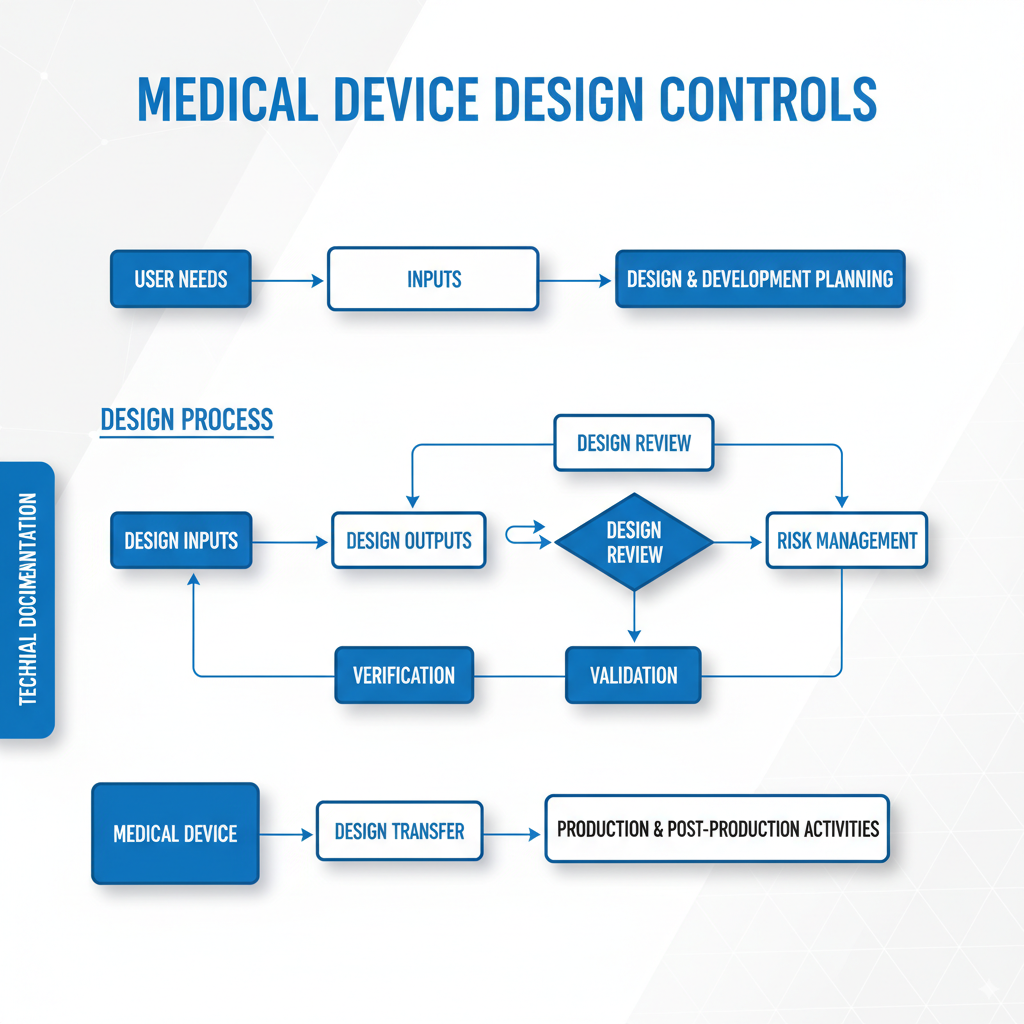
What Is the Design Process of a Medical Device?


The medical device design process follows a systematic approach governed by FDA design controls and international standards. This structured methodology ensures safety, efficacy, and regulatory compliance throughout development.


Design Inputs: Foundation of Success


Design inputs represent the essential requirements that define what the device must accomplish. These include user requirements, safety standards, regulatory constraints, performance specifications, and environmental conditions. 


Proper design inputs serve as the foundation for all subsequent design and development activities.


Critical design input categories:


  • Performance requirements: What the device must achieve
  • Safety requirements: Risk mitigation and user protection
  • Regulatory requirements: FDA, EU MDR, and international standards
  • User requirements: Clinical workflow integration and usability
  • Environmental requirements: Operating conditions and durability

Design Outputs: Translating Requirements into Reality


Design outputs are the tangible results of the design process—specifications, drawings, risk analyses, protocols, and the device itself. Each design output must be traceable to specific design inputs and verified through testing.


Design Reviews: Ensuring Excellence Through Iteration


Design reviews provide systematic evaluation and refinement cycles throughout development. Cross-functional teams assess design progress against requirements, identify potential issues, and ensure design optimization before moving to the next phase.


Design Verification: Building It Right


Design verification confirms that the device meets specified design inputs through objective testing. This includes performance testing, safety evaluations, and regulatory compliance verification.


Design Validation: Building the Right Device


Design validation ensures the device meets user needs and intended uses under real-world conditions. This often involves clinical studies, usability testing, and end-user evaluations.


Design Controls: Comprehensive Documentation and Traceability


Design controls provide the framework for managing the entire design process. This includes maintaining comprehensive documentation, change control procedures, and traceability matrices linking inputs to outputs to verification activities.


Understanding Medical Device Classifications: Why It Matters for Your Bottom Line


Medical device classification directly impacts development timeline, cost, and regulatory requirements. Understanding these classifications early in your project enables accurate planning and budget allocation.


Class I vs. Class II vs. Class III: Timeline and Cost Implications


Class I Devices: The Express Lane

  • Timeline: 6 months to 2 years
  • Development cost: Under $1 million
  • Examples: Surgical masks, tongue depressors, bandages
  • Regulatory path: Simple registration and listing
  • Key advantage: Fastest time to market

Class II Devices: The Sweet Spot

  • Timeline: 1-3 years
  • Development cost: $2-5 million
  • Examples: Catheters, ventilators, patient monitors
  • Regulatory path: 510(k) clearance demonstrating substantial equivalence
  • Key advantage: Balanced risk-reward profile

Class III Devices: The Marathon

  • Timeline: 3-7 years
  • Development cost: $10-94 million
  • Examples: Pacemakers, defibrillators, artificial hearts
  • Regulatory path: Premarket Approval (PMA) with extensive clinical data
  • Key advantage: Highest reimbursement and market protection

Regulatory Pathway Selection Strategy

Choosing the optimal regulatory pathway requires deep understanding of predicate devices, regulatory precedents, and emerging FDA guidance. The wrong pathway selection can add years to development timelines and millions to costs.


510(k) Pathway Optimization:

  • Predicate device analysis and selection
  • Substantial equivalence demonstration
  • Testing requirement minimization
  • FDA communication strategy

De Novo Pathway Advantages:

  • Novel device classification
  • Lower risk category assignment
  • Market exclusivity potential
  • Regulatory precedent establishment


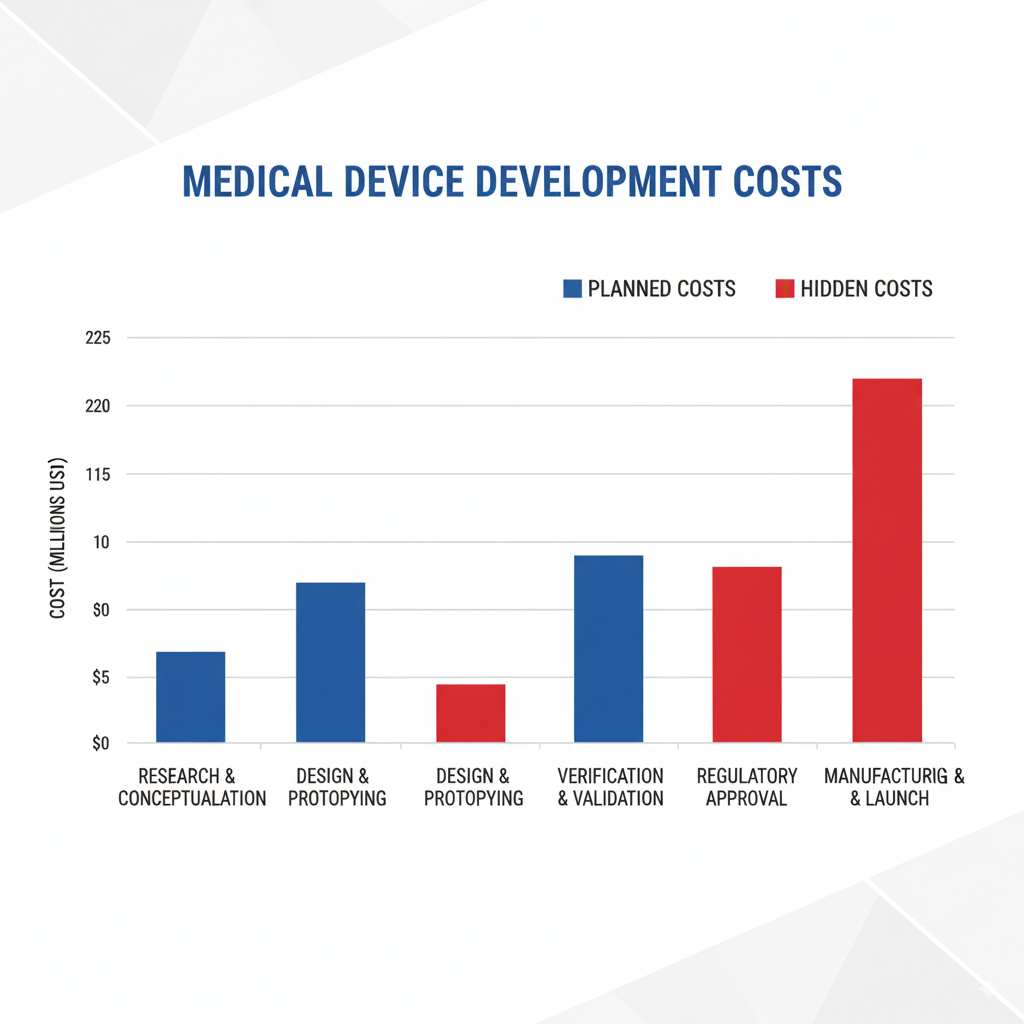
The Hidden Costs: Why 75% of Medical Device Startups Fail


Over 75% of new startups face challenges that can derail their projects, primarily due to inadequate planning and understanding of the complex medical device development landscape.


Common Pitfalls That Destroy Budgets


Documentation Gaps: The Silent Project Killer


Inadequate design controls documentation leads to regulatory delays, failed inspections, and expensive rework. Companies often underestimate the documentation requirements, resulting in scrambled efforts to compile missing records during FDA reviews.


Risk Management Failures: Costly Redesign Cycles


Poor upfront risk assessment using ISO 14971 principles leads to late-stage design changes when hazards are discovered during verification testing. These redesign cycles can double development timelines and budgets.


Design Control Deficiencies: Validation Nightmares


Insufficient design controls create traceability gaps between user requirements and final design outputs. This results in expensive validation studies that fail to demonstrate device safety and efficacy.


Regulatory Pathway Mistakes: The Million-Dollar Wrong Turn

Selecting the wrong regulatory pathway or inadequate FDA communication strategy can result in “Refuse to Accept” notices, requiring complete submission rework and adding 6-12 months to timelines.


Smart Investment Strategies for Device Development


Phase-Gate Funding Approach


Structure investment to align with development milestones, reducing risk exposure while maintaining development momentum. This approach enables course correction before major financial commitments.

Regulatory Consulting Integration


Early regulatory strategy development prevents costly late-stage surprises and optimizes submission timing. Invest in regulatory expertise upfront rather than scrambling during submission phases.


Quality System Early Implementation


Implementing ISO 13485 quality management systems early in development creates efficient documentation processes and prevents expensive retroactive compliance efforts.


Design Controls: Your Safety Net Against Catastrophic Failures


Design controls serve as the backbone of successful medical device development, providing structure, traceability, and regulatory compliance throughout the entire product lifecycle.


FDA 21 CFR Part 820 vs. ISO 13485: Which Path Is Right for You?


FDA 21 CFR Part 820: The U.S. Standard


  • Prescriptive requirements with specific procedural mandates
  • Focused on device safety and effectiveness
  • Detailed labeling and packaging requirements
  • Strong emphasis on change control and document management

ISO 13485: The Global Framework


  • Risk-based approach with flexibility in implementation
  • International harmonization enabling global market access
  • Process-focused rather than prescriptive
  • Easier integration with other management systems

Strategic Consideration: Many successful companies implement both standards simultaneously, enabling global market access while ensuring U.S. regulatory compliance.


Building a Bulletproof Design History File (DHF)


The Design History File serves as the complete record of design and development activities. A well-constructed DHF enables efficient regulatory submissions and protects against compliance issues.


Essential DHF Components:


  • Design planning and procedures
  • Design inputs and requirements
  • Design outputs and specifications
  • Design review records and decisions
  • Verification and validation reports
  • Risk management documentation
  • Change control records

DHF Best Practices:


  • Establish systematic filing procedures from project initiation
  • Implement version control and document management systems
  • Ensure traceability between all design elements
  • Regular internal audits to identify gaps
  • Cross-reference regulatory submission requirements


Manufacturing Readiness: From Prototype to Production Scale


Successful transition from development to manufacturing requires careful planning, process validation, and quality system implementation.


Design for Manufacturability (DFM): Avoiding the $2M Mistake


Design for Manufacturability principles integrated early in development prevent expensive manufacturing issues and enable cost-effective production scaling.


Critical DFM Considerations:


  • Material selection: Optimize for both performance and manufacturability
  • Process compatibility: Ensure design works with intended manufacturing methods
  • Tolerance optimization: Balance performance requirements with manufacturing capabilities
  • Assembly simplification: Minimize complexity and potential error sources
  • Quality control integration: Design in inspection and testing capabilities

The $2M Mistake: Companies that ignore DFM principles often face expensive tooling changes, process modifications, and facility upgrades during scale-up. These costs, combined with launch delays, frequently exceed $2 million for complex devices.


Quality Management Systems That Actually Work


Effective quality management systems provide the foundation for consistent manufacturing and regulatory compliance.


ISO 13485 Implementation Strategies:


  • Process mapping: Document all key processes and interactions
  • Risk-based approach: Focus resources on highest-risk activities
  • Continuous improvement: Establish metrics and improvement processes
  • Supplier management: Integrate suppliers into quality system
  • Employee training: Ensure competency and understanding throughout organization

Risk Management (ISO 14971) Integration:

  • Hazard identification: Systematic evaluation of potential risks
  • Risk estimation: Quantitative assessment of probability and severity
  • Risk control: Implementation of mitigation measures
  • Residual risk evaluation: Assessment of remaining risks
  • Post-market surveillance: Ongoing monitoring and risk reassessment


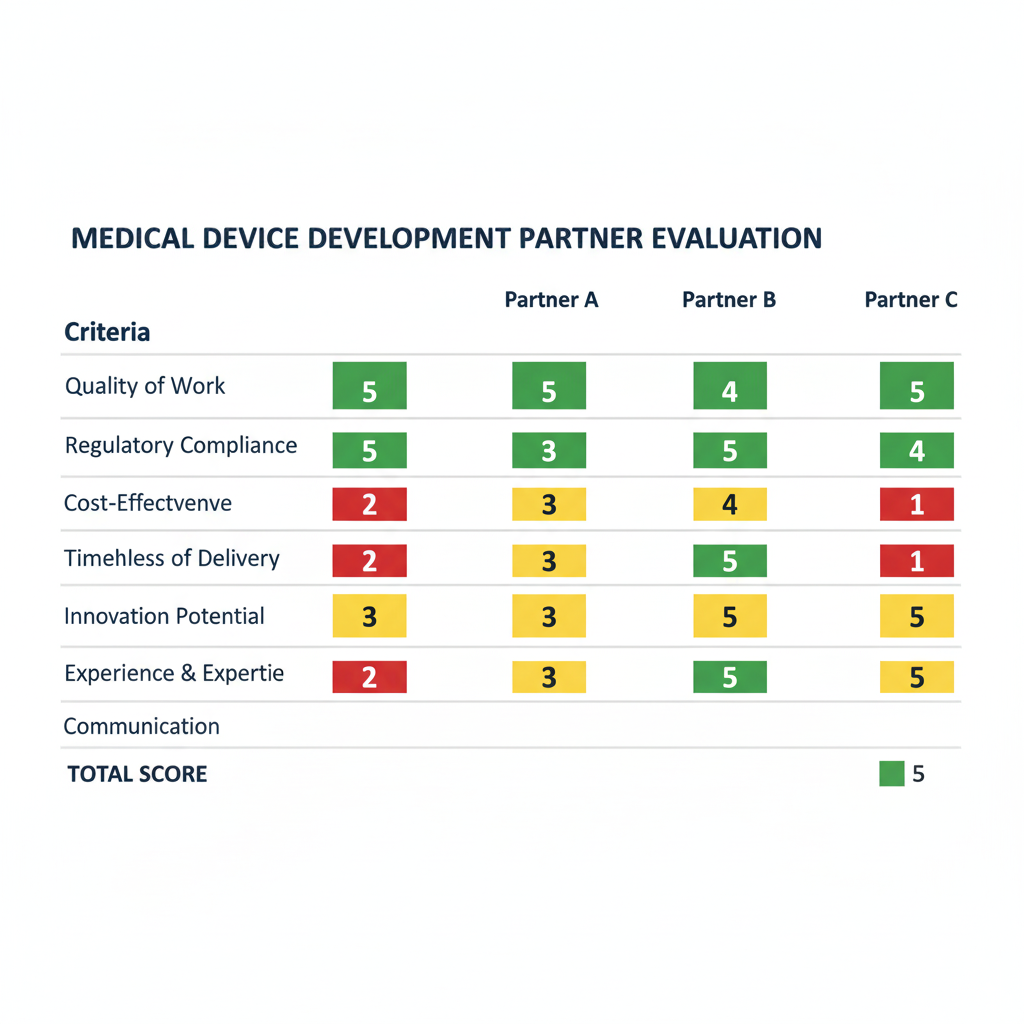
Choosing the Right Medical Device Development Partner: A Strategic Framework


Selecting the optimal development partner significantly impacts project success, timeline, and cost. Use this framework to evaluate potential partners and make informed decisions.


Red Flags: When “Experience” Actually Means “Outdated”


Warning Signs to Avoid:


  • Generic experience claims: “Decades of experience” without specific device examples
  • Limited regulatory knowledge: Inability to discuss current FDA guidance or MDR requirements
  • Outdated technology: Reliance on legacy design tools and methodologies
  • Poor documentation practices: Inability to demonstrate robust design controls
  • Limited quality system maturity: Absence of ISO 13485 certification or equivalent

Positive Indicators:

  • Specific device portfolios: Demonstrated success with similar device types and classifications
  • Current regulatory expertise: Active participation in FDA meetings and industry working groups
  • Modern capabilities: Investment in current design tools, testing equipment, and facilities
  • Quality system maturity: Established ISO 13485 systems with successful audit history
  • Continuous learning: Evidence of ongoing training and capability development

Due Diligence Questions Every Executive Should Ask


Technical Capabilities Assessment:

  1. “Show us three devices similar to ours that you’ve successfully brought to market.”
  2. “What’s your approach to design controls and how do you ensure FDA compliance?”
  3. “How do you handle risk management throughout the development process?”
  4. “What testing capabilities do you have in-house vs. outsourced?”
  5. “How do you approach design for manufacturability?”

Regulatory Expertise Evaluation:

  1. “What’s your experience with our device’s specific regulatory pathway?”
  2. “How do you stay current with changing FDA guidance and regulations?”
  3. “Can you provide examples of successful regulatory submissions for similar devices?”
  4. “What’s your relationship with FDA and how do you manage agency communications?”
  5. “How do you handle international regulatory requirements?”

Project Management and Communication:

  1. “What project management methodologies do you use and why?”
  2. “How do you handle scope changes and timeline adjustments?”
  3. “What’s your communication cadence and reporting structure?”
  4. “How do you manage intellectual property and confidentiality?”
  5. “What happens if key team members leave during our project?”


Timeline Expectations: Realistic Planning for Device Development


Understanding realistic timelines enables accurate project planning and stakeholder management throughout the development process.


Factors That Accelerate or Derail Your Project


Timeline Accelerators:


  • Clear requirements definition: Well-defined user needs and specifications
  • Appropriate regulatory pathway: Optimal route selection based on device characteristics
  • Experienced team: Proven track record with similar devices and regulations
  • Robust project management: Structured approach with clear milestones and accountability
  • Early regulatory engagement: Proactive FDA communication and guidance seeking

Common Derailment Factors:

  • Scope creep: Uncontrolled feature additions and requirement changes
  • Regulatory surprises: Unexpected pathway complications or additional requirements
  • Design control gaps: Inadequate documentation requiring extensive rework
  • Testing failures: Inadequate initial design leading to multiple test iterations
  • Supplier issues: Unqualified suppliers or component availability problems

Managing Stakeholder Expectations Throughout Development


Executive Communication Strategy:


  • Monthly executive summaries: High-level progress and risk updates
  • Quarterly business reviews: Detailed progress assessment and planning
  • Milestone celebrations: Recognition of key achievements and team contributions
  • Risk communication: Transparent discussion of challenges and mitigation strategies

Investor Relations Management:

  • Phase-gate reporting: Progress updates aligned with funding milestones
  • Regulatory milestone tracking: Clear communication of submission timing and results
  • Market preparation updates: Commercial readiness and launch planning progress
  • Competitive landscape monitoring: Market changes and strategic implications


Why Forward-Thinking Companies Choose Specialized Expertise Over Generic Experience


The medical device industry demands specialized knowledge, current regulatory understanding, and proven execution capabilities. Generic consulting firms simply cannot match the depth and breadth of expertise required for successful medical device development.


The Specialization Advantage:


  • Deep regulatory knowledge: Current understanding of FDA requirements and emerging guidance

  • Industry relationships: Established connections with key suppliers, testing labs, and regulatory consultants
  • Proven methodologies: Refined processes optimized for medical device development
  • Risk mitigation: Experience-based understanding of common pitfalls and prevention strategies
  • Efficiency optimization: Streamlined approaches that reduce timeline and cost

Beyond Experience: The Innovation Factor


True differentiation comes not just from experience, but from the ability to anticipate and adapt to evolving industry requirements. Our team combines extensive corporate experience with entrepreneurial agility, enabling innovative solutions that address tomorrow’s challenges today.


Ready to transform your innovative medical device concept into market reality? Partner with experts who understand both today’s requirements and tomorrow’s opportunities.


About the Authors:

Eric Klumper brings over 15 years of medical device engineering expertise across industry leaders including Olympus, Terumo BCT, and Bolder Surgical. His proven track record includes successful product launches from concept through FDA approval across diverse medical device categories.


Kelsey Lee stands as one of the industry’s most accomplished regulatory strategists, with an extraordinary portfolio spanning Medtronic’s global operations, IVD program leadership at Invitae Corporation, and regulatory affairs direction at cutting-edge diagnostic companies. Her expertise encompasses over 12 FDA submissions in 12 months and successful navigation of complex regulatory pathways.


Ready to Get Started?

Transform your medical device vision into reality with proven expertise and forward-thinking innovation. Contact our team to discuss your project and discover how our unique approach can accelerate your path to market success.

[Contact Us Today]  [Schedule a Consultation]

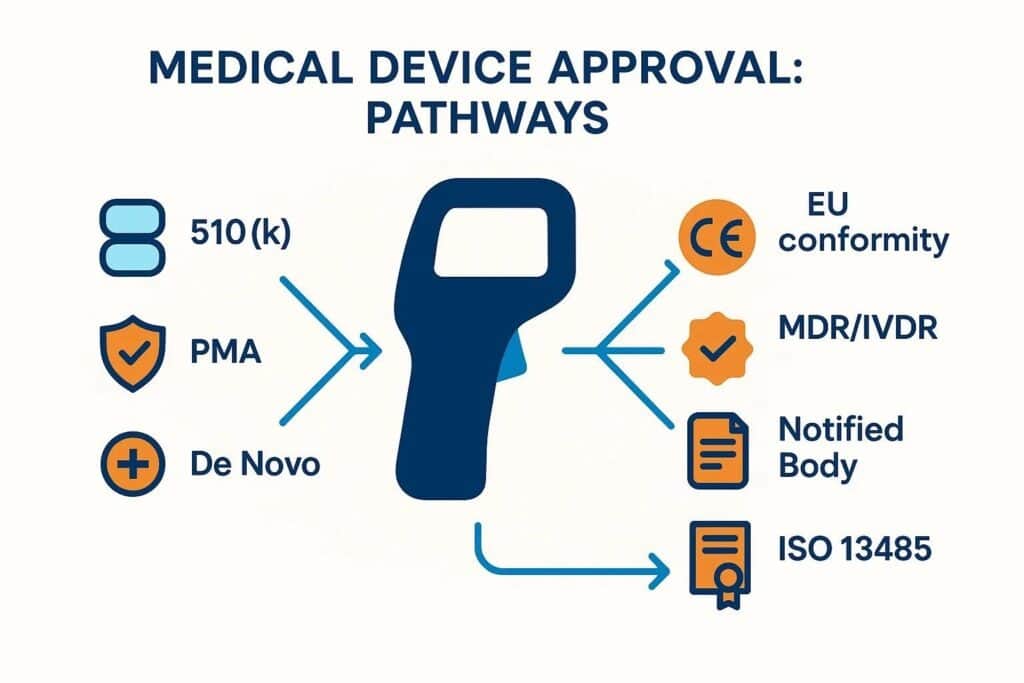
Medical Device Approval: A Strategic Guide to US & EU Market Access


Founders of medical device startups and biomedical engineers often face a critical, early challenge: navigating the intricate regulatory landscape. Bringing a medical device to market, whether in the United States or the European Union, demands rigorous adherence to regulatory processes and stringent quality controls.

This guide aims to demystify these requirements by detailing:


    • The foundational importance of device classification.

    • Distinct FDA approval pathways (510(k) vs. PMA).

    • The nuances of CE Mark conformity under EU MDR/IVDR.

    • The indispensable role of ISO 13485 certification.


Medical Device Approval: A Strategic Guide to US & EU Market Access

Founders of medical device startups and biomedical engineers often face a critical, early challenge: navigating the intricate regulatory landscape. Bringing a medical device to market, whether in the United States or the European Union, demands rigorous adherence to regulatory processes and stringent quality controls. This guide aims to demystify these requirements.

It explains the foundational importance of device classification, the distinct FDA approval pathways like 510(k) clearance and Premarket Approval (PMA), the nuances of CE Mark conformity under EU MDR/IVDR, and the indispensable role of ISO 13485 certification.

Our objective is to provide a comprehensive, go-to resource. We detail how classification impacts regulatory burden, outline FDA documentation and testing expectations for different submissions, explain how notified bodies assess conformity for CE marking, and demonstrate how a certified quality management system (QMS) facilitates both U.S. and EU market access.

The discussion focuses on practical steps, potential timelines, common pitfalls, and actionable strategies, empowering teams to plan studies, meticulously prepare technical documentation, manage post-market obligations, and effectively engage with regulatory authorities. This isn’t just theory; it’s direct advice from a consultant who has spent over 16 years in regulatory affairs, witnessing firsthand the critical junctures and potential missteps.

Understanding FDA Medical Device Classifications and Their Regulatory Impact

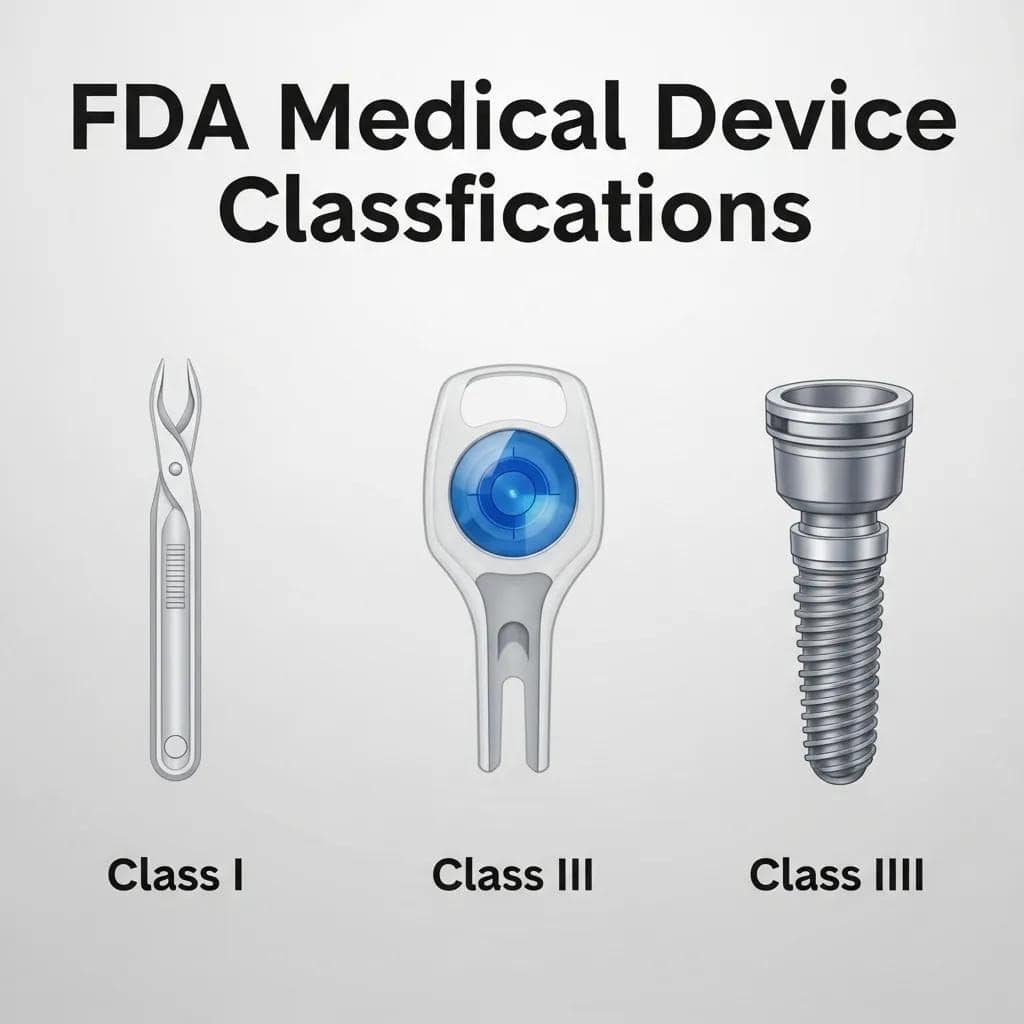
Device classification is the cornerstone of regulatory strategy in the U.S. It assigns a risk tier—Class I, II, or III—directly influencing the scope of applicable regulatory controls and the specific approval process. This early determination matters significantly. It dictates the required evidence burden, the necessity of general or special controls, or ultimately a PMA, and the projected timelines.

Devices deemed lower risk typically rely on general controls and may even be exempt from premarket notification. Conversely, higher-risk devices demand far more rigorous data and comprehensive review. Misclassifying a device can lead to substantial delays and wasted resources. An accurate initial assessment informs everything: biocompatibility testing, performance evaluation, the need for clinical trial data, and even labeling requirements.

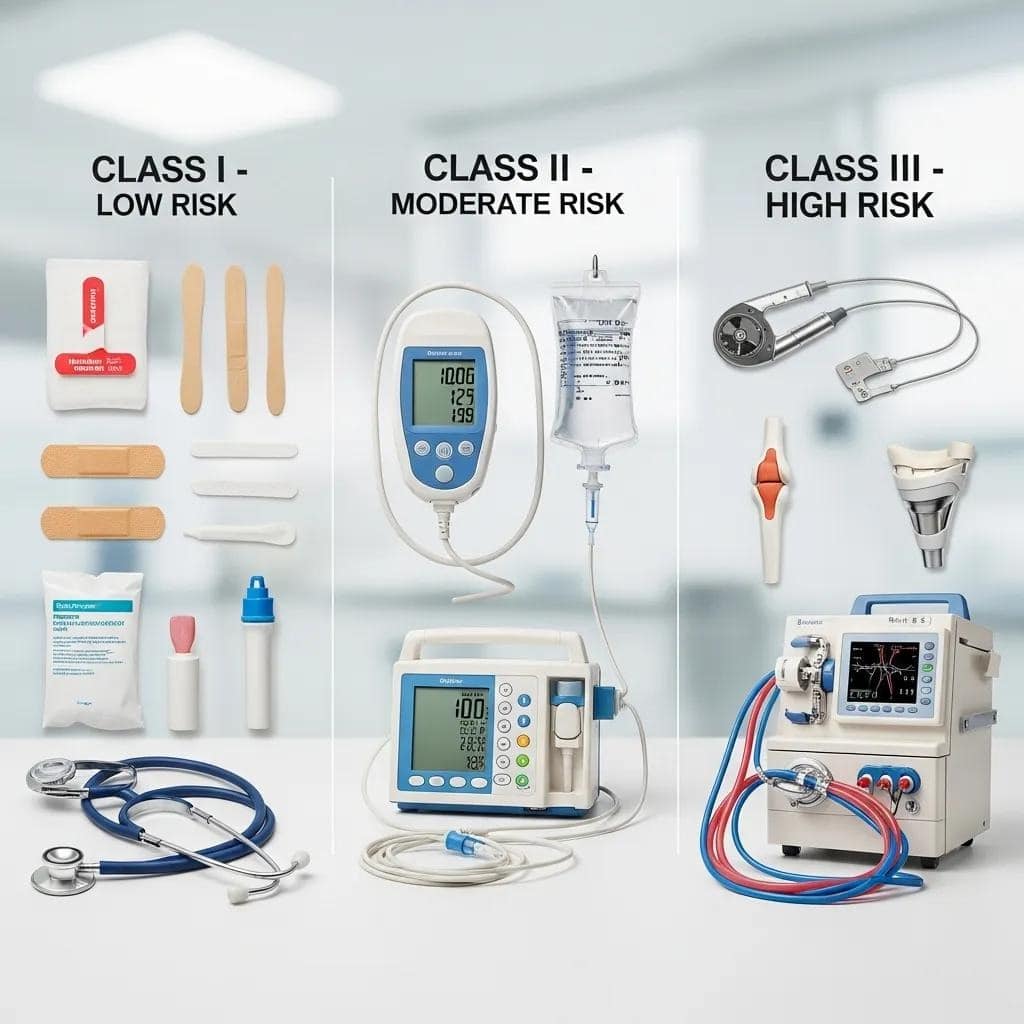
Consider this simplified classification matrix:

Device Class Risk Level Typical Examples Common Regulatory Pathways
Class I Low Tongue depressor, elastic bandage General controls; many exempt from premarket notification
Class II Moderate Infusion pumps, surgical lasers 510(k) clearance or De Novo if no predicate; special controls
Class III High Implantable defibrillators, stents PMA; rigorous clinical and manufacturing evidence

This matrix underscores why a precise risk assessment at the outset saves both time and significant capital. It aligns your testing, technical documentation, and submission strategy with the FDA’s expectations.

Defining and Regulating Class I, II, and III Devices

Class I devices carry minimal risk. They are primarily subject to general controls, which include requirements for proper labeling, facility registration, and basic quality management system adherence. Many Class I products are exempt from premarket notification, though they must still meet essential manufacturing and labeling obligations.

Class II devices present a moderate risk. These devices require special controls in addition to general controls. Manufacturers typically pursue a 510(k) submission, demonstrating substantial equivalence to an existing legally marketed predicate device. If no suitable predicate exists, a De Novo classification request might be an option.

Class III devices represent the highest risk category. These devices are often life-sustaining, life-supporting, implanted, or pose a potentially unreasonable risk of illness or injury. For these, a PMA is typically mandated. This process demands extensive clinical data to definitively demonstrate the device’s safety and efficacy, and it operates under the most stringent regulation.

Understanding these definitions early enables teams to select appropriate standards, develop robust testing protocols, and plan pre-submission interactions effectively. This mitigates review deficiencies and streamlines the overall regulatory compliance effort.

This precise regulatory framing then directly leads to pathway selection: 510(k), De Novo, IDE-supported clinical studies, or PMA submission. The choice hinges on specific device features, its intended use, and the availability of suitable predicates.

Implications of Device Classification on Regulatory Pathways

Device classification directly dictates the appropriate regulatory pathway and the intensity of required clinical evidence. It profoundly shapes timelines, ranging from months for many 510(k)s to several years for PMA reviews and pivotal trials.

For instance, an electrical monitor, if based on a clear predicate, could achieve 510(k) clearance with bench testing and limited clinical performance evaluation. However, a novel implantable device lacking a predicate would almost certainly require a De Novo or PMA pathway, necessitating substantive clinical investigation under an Investigational Device Exemption (IDE).

Risk controls further influence labeling, post-market surveillance, and post-approval study obligations. This, in turn, impacts manufacturing controls and corrective and preventive action (CAPA) planning. Consequently, early classification decisions should drive a comprehensive regulatory plan.

This plan must accurately sequence verification and validation testing, define clinical study design, and outline quality management system activities. Such an integrated approach helps avoid costly rework and aligns product development with FDA expectations.

Explicit pathway planning reduces uncertainty when developmental changes arise. It also provides clear decision points—such as whether to pursue a De Novo request or design an IDE-led trial—that align with business timelines and risk management strategies.

The 510(k) Submission Process: Navigating Market Entry for Moderate-Risk Devices

A 510(k) submission aims to demonstrate that a new medical device is substantially equivalent to a legally marketed predicate device. This pathway allows moderate-risk devices (Class II medical devices) to enter the U.S. market without the full burden of a PMA.

The process operates by aligning the new device’s indications for use, technological characteristics, and performance data with a predicate device. This allows the FDA to reasonably conclude equivalent safety and effectiveness. Fundamentally, this mechanism helps shorten time-to-market for many Class II products, a crucial factor for medical device manufacturers.

Successful 510(k) preparation requires a comprehensive technical file, supported by appropriate bench and, where necessary, clinical evidence, along with clear labeling and a thorough risk analysis. Engaging in pre-submission (Q-Sub) interactions with the FDA can prove invaluable. These early discussions often clarify testing expectations, statistical endpoints, and whether additional clinical data will be necessary, significantly reducing the likelihood of a substantial equivalence denial.

The following element breakdown can assist teams in assigning ownership and planning early document production. This ensures efficient reviewer responses and minimizes review cycles.

510(k) Element Requirement Typical Owner / Purpose
Predicate Device Demonstrate substantial equivalence Regulatory lead compares indications and tech characteristics
Device Description Design, components, software, accessories Engineering provides detailed schematics and specs
Performance Testing Bench, biocompatibility, electrical safety Test lab delivers validated reports and protocols
Sterilization & Shelf-life Validation and packaging QA/CMC documents processes and stability data
Labeling & Instructions Intended use and warnings Regulatory drafts, legal reviews labeling content
Summary & Truthful Statements Executive summary and certifications Regulatory compiles submission narrative

Steps and Requirements for a Successful 510(k) Submission

A successful 510(k) submission follows a defined sequence. First, clearly articulate the device’s intended use and identify the most relevant predicate. Then, conduct a thorough risk analysis (e.g., per ISO 14971) and execute all necessary verification and validation (V&V) testing.

This includes bench, software, and biocompatibility tests. Compile a detailed device description, complete labeling, and robust performance data. Manufacturers may consider a pre-submission meeting with the FDA to clarify testing expectations and statistical endpoints. Finally, prepare the submission in FDA-accepted formats, ensuring comprehensive test evidence supports every claim.

Key 510(k) workflow checkpoints include:

1. Define Device & Predicate: Establish clear indications for use; identify the most relevant predicate medical device.
2. Complete Risk Management: Perform risk analysis per ISO 14971, mapping mitigations to specific tests.
3. Execute V&V Testing: Complete bench, software, and biocompatibility testing with traceable protocols.
4. Prepare Labeling & Instructions: Draft clear, compliant labeling and warnings.
5. Submit & Respond: File the 510(k); be ready to address deficiency letters promptly.

These steps directly affect acceptance rates and timelines. Organized evidence and early engagement typically reduce deficiency letters and shorten overall review durations. Maintaining an organized, indexed submission package, anticipating reviewer questions, is crucial.

Common Reasons for 510(k) Submission Failures and Mitigation Strategies

Failures in 510(k) submissions commonly stem from insufficient predicate justification, incomplete or poorly formatted test reports, or a lack of traceability between requirements and test results. Inadequate software documentation for Software as a Medical Device (SaMD), along with labeling that conflicts with intended use statements, also frequently cause issues.

To avoid these pitfalls, ensure each test report contains a clear protocol, defined pass/fail criteria, raw data appendices, and a summary directly linking results to device requirements. A trace matrix, connecting design inputs to verification and validation activities, is not merely good practice—it’s essential. For connected devices or those incorporating AI/ML, document software risk controls and cybersecurity measures diligently, following all relevant FDA guidance.

Statistical underpowering in studies or the absence of clinically relevant performance evaluation metrics can also prompt reviewers to request additional data. Planning sample sizes and endpoints meticulously and in advance can mitigate this risk. Internal technical reviews and, when appropriate, pre-submission meetings, serve as critical checkpoints.

They confirm expectations and reduce the likelihood of a “refusal to accept” or significant deficiency letters. Implementing robust document control and mandatory cross-functional sign-offs before submission establishes a defensible narrative, addressing reviewer expectations and ultimately shortening overall review timelines.

Premarket Approval (PMA): The Rigorous Path for High-Risk Devices

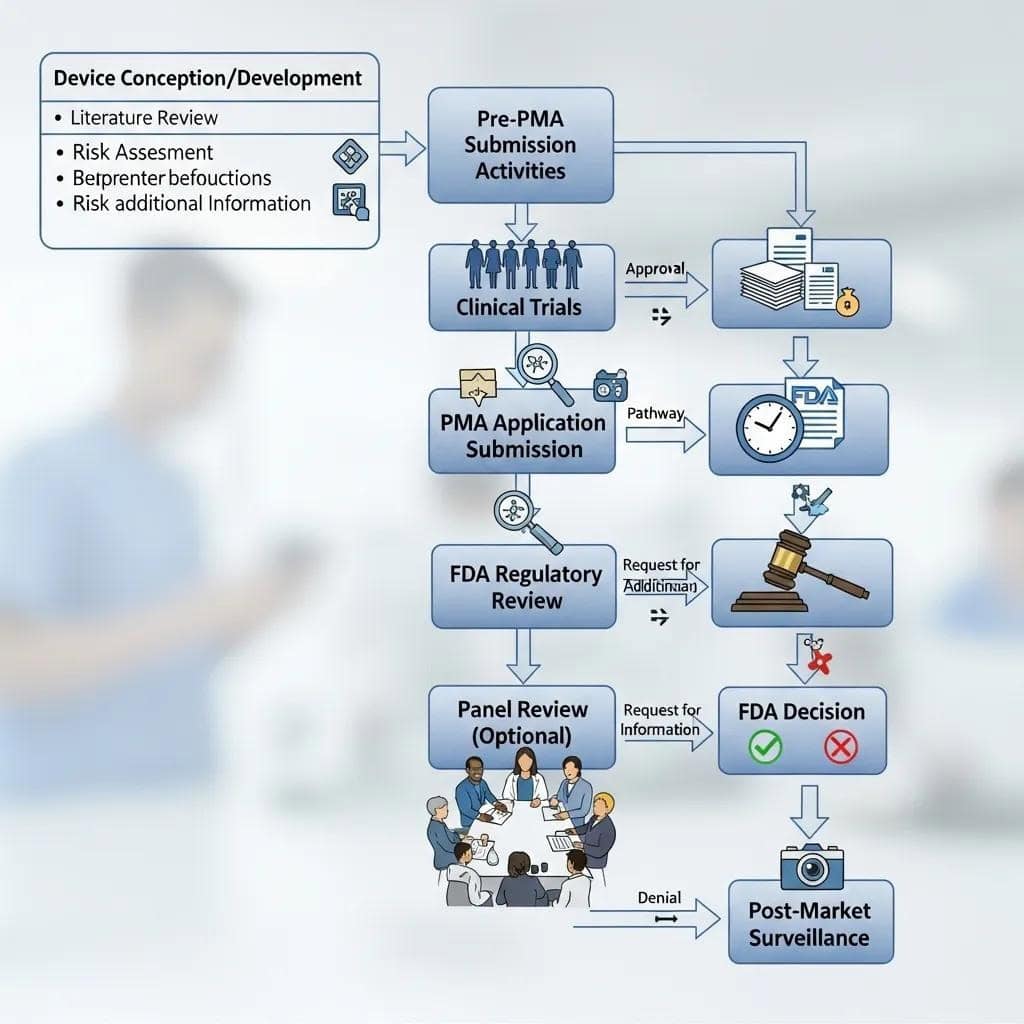
The Premarket Approval (PMA) pathway represents the FDA’s most stringent approval process for medical devices. It is typically reserved for Class III devices, those that are life-sustaining, life-supporting, or pose a significant risk of illness or injury. PMA requires substantial scientific evidence demonstrating a reasonable assurance of safety and effectiveness.

This often includes pivotal clinical trials, extensive CMC (chemistry, manufacturing, and controls) documentation, and a thorough risk-benefit analysis. The PMA process is characterized by an exceptionally rigorous review, often involving an advisory committee evaluation, and formal post-approval commitments. It ensures that high-risk devices meet the highest evidentiary standards before they reach the market.

Medical device manufacturers must carefully plan IDE studies to generate the necessary clinical data. They must also develop robust manufacturing controls in full adherence to 21 CFR Part 820 quality system requirements. This requires preparing extensive modules that cover clinical, nonclinical, and manufacturing data.

Because PMA reviews are considerably more resource-intensive and time-consuming than 510(k) submissions, manufacturers must align clinical strategy, manufacturing scale-up, and supply-chain controls early in development. This proactive approach helps avoid costly delays during regulatory review.

How PMA Differs from 510(k) Clearance

PMA fundamentally differs from 510(k) clearance in several critical aspects: evidence intensity, review depth, and post-approval obligations. PMA demands “valid scientific evidence”—typically from well-designed pivotal studies, often randomized and controlled. It requires highly detailed CMC data and comprehensive risk analyses. In contrast, a 510(k) relies on demonstrating substantial equivalence to a predicate, generally with less rigorous clinical data requirements.

Timelines for PMA submissions are substantially longer. Premarket data collection, multiple FDA inspections (including manufacturing facilities), potential panel reviews, and mandated post-approval studies can extend the process over multiple years. PMA applicants should anticipate deeper scrutiny of manufacturing processes and facilities, stricter device controls, and ongoing market surveillance. This includes explicit post-approval study commitments.

Practically, pursuing a PMA significantly impacts budget, clinical development timelines, and commercialization planning. It often necessitates sustained interaction with the FDA across several milestones: IDE submissions, pivotal trial monitoring, and pre-PMA meetings. This comparison underscores why an early decision regarding the appropriate pathway—510(k), De Novo, or PMA—is critical for clinical planning, managing investor expectations, and ensuring optimal product launch timing.

Clinical and Regulatory Requirements for PMA Approval

PMA applications require more than just a device. They must include IDE-supported pivotal trials with prospectively defined endpoints, robust statistical analysis plans, stringent safety monitoring, and often long-term patient follow-up. This is in addition to exhaustive documentation of manufacturing, sterilization, and device design.

The IDE submission itself secures permission to conduct investigational clinical testing. It must contain details on device manufacturing controls, investigator agreements, informed consent templates, and detailed monitoring plans. Pivotal trials, by definition, must be statistically powered to demonstrate the predefined primary endpoints with convincing efficacy.

CMC expectations are equally demanding. They require full descriptions of manufacturing processes, process validations, stability data, and rigorous supplier controls to ensure product reproducibility and safety. During the review, the FDA may convene an advisory committee for high-consequence devices.

Applicants should therefore be prepared to present integrated evidence and address complex questions regarding the device’s benefit-risk balance and long-term performance. Careful alignment between clinical endpoints, statistical plans, and manufacturing validation reduces the risk of PMA deficiencies. This integrated approach supports a streamlined review, balancing patient safety with timely market access for innovative, high-risk medical technologies.

CE Mark Medical Device Requirements Under EU MDR and IVDR

Obtaining a CE Marking under the European Union Medical Device Regulation (EU MDR) and In Vitro Diagnostic Regulation (IVDR) signifies conformity with European regulatory requirements. It obliges medical device manufacturers to produce comprehensive technical documentation, demonstrate compliance with general safety and performance requirements (GSPR), and, for many devices, engage a notified body for conformity assessment.

The MDR/IVDR frameworks significantly broadened the scope of regulation, tightened expectations for clinical evidence, and increased post-market surveillance obligations compared to the previous Directives. This makes robust clinical evaluation and proactive post-market clinical follow-up (PMCF) absolutely essential.

Classification rules under MDR/IVDR also differ from FDA classifications. Many devices have been reclassified into higher risk categories, directly impacting whether a notified body is required and which specific conformity assessment route applies. The following table summarizes key MDR/IVDR responsibilities and the typical evidence needed to support conformity assessments, assisting teams in planning their documentation and audits.

MDR/IVDR Requirement Who is Responsible / Typical Evidence Purpose
Clinical Evaluation Manufacturer / Clinical Evaluation Report (CER) Demonstrate clinical safety and performance
Technical Documentation Manufacturer / Technical File Show conformity with General Safety & Performance Requirements
Notified Body Assessment Notified Body / Audit Reports Independent conformity assessment for higher-risk devices
Post-Market Surveillance (PMS) Manufacturer / PMS Plan & Reports (including PMCF activities) Ongoing safety monitoring and PMCF activities

How the CE Marking Process Ensures Compliance with EU Medical Device Regulation

The CE Marking process in the EU follows a precise sequence. First, manufacturers must determine their device’s classification under the MDR/IVDR. Next, prepare comprehensive technical documentation and conduct a thorough clinical evaluation. Then, select the appropriate conformity assessment route. If required, undergo Notified Body audits and assessment before issuing a Declaration of Conformity and affixing the CE Mark.

The technical documentation must encompass a detailed device description, comprehensive risk management files, robust clinical evidence (CER), and clear post-market surveillance plans. Post-market clinical follow-up (PMCF) is frequently mandated, particularly for higher-risk devices. Timelines for CE certification are often affected by Notified Body capacity and the completeness of the technical file.

Common bottlenecks include insufficient clinical evidence, incomplete risk management documentation, or inadequate supplier oversight. A robust conformity plan typically involves early Notified Body engagement, clear clinical data strategies, and proactive PMS systems to meet MDR/IVDR expectations, thereby avoiding delays in CE certification. Preparing documentation that anticipates Notified Body questions significantly reduces iteration cycles, fostering efficient conformity assessment under the more stringent MDR/IVDR framework.

The Critical Role of Notified Bodies and Clinical Evaluation in CE Mark Approval

Notified Bodies are independent third-party organizations designated by EU member states to assess the conformity of higher-risk medical devices before they can be CE Marked. They conduct rigorous audits of quality management systems and meticulously review technical documentation, including Clinical Evaluation Reports (CERs). Their ultimate role is to issue certificates, which then permit the manufacturer to apply the CE Marking.

Selecting a Notified Body requires careful consideration of their scope, expertise with similar device types, and current audit timelines. Manufacturers should prepare for in-depth audits that scrutinize their QMS, supplier controls, and clinical evidence package. Clinical Evaluation Reports are particularly crucial.

They must systematically collect, appraise, and synthesize clinical data—drawing from published literature, clinical investigations, and post-market data—to demonstrate conformity with the GSPR. It is imperative that the evidence hierarchy is clearly presented, and any clinical data gaps are explicitly justified.

Practical preparation for Notified Body assessments includes meticulously organizing the technical file, demonstrating complete traceability from device requirements to verification activities, and maintaining robust, surveillance-ready PMS documentation. Thorough CERs and well-prepared Notified Body audits ultimately shorten certification timelines, minimize requests for additional information, and streamline the overall conformity assessment process.

ISO 13485 Certification: The Foundation of Medical Device Quality

ISO 13485 establishes the specific quality management system (QMS) requirements for the medical device industry. This international standard serves as a critical support mechanism for regulatory compliance, aligning processes for design control, supplier management, production, and post-market activities.

Achieving certification demonstrates a manufacturer’s commitment to consistent product quality. It provides a structured framework that maps effectively to both the FDA’s Quality System Regulation (21 CFR Part 820) and CE Mark expectations, rendering regulatory submissions and inspections far more predictable.

Key benefits of ISO 13485 certification include enhanced process control, clear traceability from requirements through verification and validation, strengthened supplier oversight, and formalized mechanisms for CAPA and risk management.

Collectively, these elements reduce nonconformances, improve overall product safety and efficacy, and support global market access. Implementing ISO 13485 early in product development embeds quality directly into all product lifecycle activities. This proactive approach often pre-empts many regulatory review issues by ensuring that necessary documentation and controls are robustly in place.

How ISO 13485 Supports Regulatory Compliance and Market Access

ISO 13485 provides standardized processes—including document control, design validation, supplier qualification, CAPA, and corrective action procedures. These directly align with the regulatory compliance expectations of both the FDA and EU authorities, making subsequent audits and submissions considerably more straightforward.

For example, a robust document control system ensures that test protocols, validation reports, and labeling are version-controlled, easily accessible, and readily auditable. Similarly, well-defined supplier management processes reduce variability in components and services, directly supporting the CMC requirements critical for PMA or 510(k) submissions.

Furthermore, a certified QMS formalizes post-market surveillance and feedback loops. This vital data directly informs product improvements and regulatory reporting, aligning seamlessly with the PMS and vigilance obligations mandated under MDR/IVDR legislation. Organizations that deeply integrate ISO 13485 into their product development lifecycle tend to encounter fewer review comments.

They can consistently demonstrate sustained regulatory compliance to both regulators and commercial partners, ultimately accelerating global market access. This operational alignment reduces friction during inspections and conformity assessments by establishing auditable, repeatable processes that regulators recognize as tangible evidence of reliable manufacturing and design practices.

Steps to Achieve and Maintain ISO 13485 Certification

Achieving ISO 13485 certification typically follows a structured roadmap. First, conduct a thorough gap analysis against the ISO requirements. Next, meticulously document all procedures and policies. Implement these processes across the organization, covering design control, supplier management, and CAPA. Conduct internal audits and management reviews to identify and address any nonconformities. Finally, undergo a certification audit by a recognized registrar.

While timelines vary, smaller organizations might anticipate 6–12 months for initial implementation and corrective activities before a successful certification audit. Maintaining certification requires continuous effort: periodic surveillance audits, ongoing internal audits, and meticulous documentation of continuous improvements. Integrating risk management and PMS into routine QMS activities can significantly reduce rework.

It supports long-term regulatory readiness. Practical tips include prioritizing document control, establishing a clear CAPA workflow, and ensuring all staff are thoroughly trained on their QMS responsibilities. This comprehensive, sustained approach creates lasting regulatory compliance. Following this stepwise plan ensures robust certification readiness and positions medical device manufacturers to confidently support regulatory submissions and strategic market expansion with a stable, high-quality platform.

FDA’s Refuse to Accept (RTA) process is an acceptance review—it checks whether your 510(k) submission is complete enough to begin substantive review. FDA’s guidance emphasizes that acceptance is based on objective checklist criteria:

the presence of required elements (or a rationale for omission), not whether the evidence is ultimately persuasive.

Use this as a fast pre-submit “sanity check” to avoid the most common RTA-triggering gaps.

1) Indications for Use (IFU) form is included—and consistent

Missing or inconsistent “Indications for Use” language is a frequent acceptance-review failure because it’s foundational to what FDA is being asked to clear. Before submitting, make sure your IFU language matches across your submission and labeling wherever it appears.

2) 510(k) Summary (or 510(k) Statement) is present

A Traditional 510(k) should include either a 510(k) Summary or a 510(k) Statement as part of the submission package. This is one of those “simple-but-fatal” omissions that can trigger an RTA.

3) Truthful and Accuracy Statement is signed and included

FDA expects a Truthful and Accuracy Statement in a 510(k), and leaving it out is an avoidable RTA item. Confirm it’s signed/dated by the appropriate party and included in the administrative section.

4) Prior submissions are listed (or you explicitly state “none”)

The RTA guidance calls out “Prior Submissions Relevant to the Submission Under Review,” and leaving this unclear can create preventable acceptance-review friction. If there were no relevant prior submissions, state that plainly instead of leaving the section blank.

5) Device description is complete (models, materials, drawings/photos)

FDA expects enough device detail to understand exactly what is being reviewed, including variations/models and descriptive details (often supported by drawings or photos). A thin device description can become an acceptance issue when it prevents the submission from being understood.

6) Principle of operation + key performance specifications are described

FDA’s “content of a 510(k)” expectations include narrative/technical description elements like indications, principles of operation, and other information needed to understand the device. Missing these basics can make the submission hard to review and contribute to an RTA decision if the file can’t be understood.

7) Predicate device is clearly identified (and the SE framing is coherent)

Traditional 510(k)s rely on substantial equivalence to a predicate, and FDA’s content expectations include identifying the legally marketed device (often including the 510(k) number if known). If the predicate is unclear or inconsistently referenced, reviewers may struggle to understand what you’re comparing against early in the process.

8) Proposed labeling is included as final draft (labels + IFU + key warnings)

FDA’s 510(k) content page specifically notes that the labeling submitted should be final draft, and it should include directions for use plus warnings/contraindications/limitations as applicable. Missing labeling elements are a classic “checklist fail” because labeling is explicitly required content.

9) Sterility / reprocessing / shelf-life sections are addressed (when applicable)

If your device is sterile, reprocessed/reusable, or you’re making shelf-life claims, the relevant sections need to be present or clearly marked “N/A” with rationale, consistent with FDA’s objective acceptance checklist approach. A common RTA pattern is skipping an “applicability” section instead of explicitly addressing it.

10) Software (and cybersecurity-relevant) documentation is included (when applicable)

If software is part of your device, you need to include the software-related documentation expected for review, because leaving software content absent or ambiguous creates immediate completeness issues. FDA’s RTA approach again is presence/omission: include it, or clearly justify why it’s not applicable.

Navigating FDA Medical Device Classification: A Founder’s Guide to US Regulatory Pathways and Compliance


Medical device innovation moves fast. But product development demands more than ingenuity; it requires meticulous adherence to regulatory frameworks. For medical device startup founders and the biomedical engineering community, understanding the US FDA medical device classification system is non-negotiable. This isn’t merely a bureaucratic hurdle; it is the fundamental mechanism the FDA uses to align regulatory oversight with patient risk. Get it wrong, and market entry stalls.


This comprehensive guide outlines the critical aspects of FDA device classification, from the core risk-based classes (Class I, II, III) to the varied submission pathways (510(k) premarket notification, Premarket Approval [PMA], and De Novo classification). We will also touch on how emerging trends like Software as a Medical Device (SaMD), AI-enabled medical devices, and cybersecurity for medical devices are reshaping the regulatory landscape.


Our goal here is to equip you with a robust framework for strategic regulatory planning. Knowing your device’s classification early informs design, testing, and documentation requirements. This proactive approach minimizes delays, controls costs, and most importantly, ensures patient safety.


FDA Medical Device Classes: Risk and Control Scale


The FDA employs a risk-based classification system. This means the potential for harm to a patient or user directly dictates the level of regulatory control.


Devices are categorized into three classes:


Class I (lowest risk), Class II (moderate risk), and Class III (highest risk). Each class carries distinct regulatory obligations. 


This tiered approach, outlined in the Code of Federal Regulations (21 CFR Part 860), ensures an appropriate balance between promoting innovation and safeguarding public health.


Consider the distinctions below. These classifications directly inform your chosen medical device regulatory pathway and influence project timelines and resource allocation.


Device Class Typical Risk Level Required Controls Typical Pathway Example Devices
Class I Low risk General Controls (registration, labeling, QMS basics) Often exempt from premarket submission Bandages, tongue depressors
Class II Moderate risk General Controls + Special Controls (performance standards, guidance) 510(k) premarket notification Infusion pumps, diagnostic catheters
Class III High risk PMA-level controls (clinical evidence, manufacturing controls) Premarket Approval (PMA) Pacemakers, heart valves


This framework clarifies that a device’s risk profile drives both the required controls and the subsequent submission strategy. We delve deeper into each class next.


Class I Medical Devices: General Controls and Simplicity


Class I medical devices present the lowest potential for harm. Assurances of their safety and effectiveness are typically achieved through applying general controls. 


These foundational controls, mandated for all medical devices regardless of class, include:


  • Establish registration with the FDA.
  • Device listing with the FDA.
  • Adherence to Quality System Regulation (21 CFR Part 820) basics, such as complaint handling and recordkeeping.
  • Proper labeling and instructional requirements.
  • Reporting of adverse events.


Notably, many Class I devices are exempt from certain premarket requirements, like the 510(k) submission. This exemption can expedite time-to-market. However, fundamental obligations like correct labeling and adverse event reporting remain.


The specific exemptions vary significantly by product code and regulation. Understanding these details is crucial. Simple consumables, like elastic bandages or examination gloves, exemplify this category. Their minimal patient interface and established safety profiles justify a less burdensome oversight.


Class II Medical Devices: Balancing Risk with Special Controls


Class II medical devices pose a moderate risk to patients. Beyond general controls, they necessitate special controls tailored to mitigate specific identified risks, ensuring reasonable safety and effectiveness. These special controls can take various forms:


  • Performance standards.
  • Postmarket surveillance requirements.
  • Specific guidance documents published by the FDA.
  • Recommended testing protocols.
  • Unique labeling requirements.


For most Class II devices, the regulatory pathway involves a 510(k) premarket notification.


Here, manufacturers must demonstrate substantial equivalence to a legally marketed predicate device. Addressing special controls often involves rigorous bench testing, medical software validation (if applicable), and sometimes limited clinical data.


Think of devices like infusion pumps or many types of diagnostic catheters. Their direct interaction with patients, or their diagnostic function, requires predefined performance metrics and robust risk controls. A clear understanding of applicable special controls is vital for designing effective test plans and minimizing delays during FDA review.


Class III Medical Devices: Stringent Review for High Risk


Class III medical devices represent the highest risk category. These are typically life-sustaining, life-supporting, or implantable devices, or those with entirely novel technology where safety and effectiveness cannot be assured by general and special controls alone. They demand the most rigorous scientific and regulatory review.


The primary pathway for Class III devices is Premarket Approval (PMA). This process requires comprehensive clinical evidence, often involving extensive, well-designed clinical trials. Manufacturers must submit detailed data on manufacturing controls, validated processes, full labeling, and thorough risk analyses.


Post-approval surveillance commitments are also a common expectation. The PMA pathway is exhaustive, costly, and time-consuming, often involving FDA advisory panels and extended dialogue with the agency.


Integrating regulatory strategy with clinical study design from the earliest stages of development is paramount for manufacturers pursuing this pathway. This integrated approach can reduce regulatory uncertainty and ensure successful market access and long-term compliance. Pacemakers and prosthetic heart valves exemplify Class III devices.


The Classification Process: Intended Use is King


The journey to FDA clearance starts with classification. This process is not arbitrary; it’s driven by specific criteria.


First, define your device’s intended use and indications for use. This is the most critical step. Intended use describes the general purpose of the device, while indications for use specify the particular diseases or conditions the device diagnoses, treats, prevents, or mitigates, along with the target patient population.


A subtle shift in this wording can profoundly impact classification. For example, a device intended solely for in vitro diagnostic monitoring might be Class II. The same device making therapeutic claims could be Class III. Precision in these statements is key.


Next, manufacturers must:


1. Search the FDA Product Classification Database: This online tool is invaluable. Use your device’s intended use, technological characteristics, and keywords to identify existing product codes, regulatory classifications (21 CFR parts), and any specific guidance documents or special controls.


2. Identify Predicates: For Class II devices, finding a substantial equivalence predicate is crucial for a 510(k). This involves comparing your device to one already on the market regarding intended use, technological characteristics, and safety/effectiveness profiles.


3. Determine the Regulatory Pathway: Based on risk, intended use, and predicate availability, select the appropriate pathway: 510(k), PMA, or De Novo.


Regulatory panels and specific 21 CFR classifications provide the legal framework for these decisions, dictating testing expectations and control requirements. A clear, documented decision process reduces ambiguity and strengthens your submission. As Kelsey Lee, a RAPS-Device certified regulatory consultant, often emphasizes, thorough preliminary classification work saves immense time and resources down the line.


Navigating the FDA Product Classification Database: A Workflow


Effectively using the FDA Product Classification Database is a skill. Here’s a practical workflow to guide your search:


1. Initial Search: Start with concise phrases describing your device’s intended use (e.g., “in vitro glucose measurement,” “surgical guide”). This should provide an initial list of potential product codes and associated regulatory panels.

2. Refine Keywords: Add technical keywords relevant to your device (e.g., “electrochemical sensor,” “implantable,” “medical software”). This narrows results, leading to more specific regulation (21 CFR) citations.

3. Review Product Code Details: Click on relevant product codes. Examine the classification date, statutory authority, and crucially, any referenced special controls or guidance documents.

4. Predicate Research: If a 510(k) is likely, look up 510(k) summaries or De Novo decision summaries for similar devices. These offer insights into evidence types and testing protocols accepted by the FDA.

5. Document Everything: Maintain records of your search terms, the rationale behind your chosen classification, and any alternative classifications considered.


For ambiguous cases, a pre-submission meeting with the FDA Center for Devices and Radiological Health (CDRH) can provide invaluable clarity and validate your classification choice before a formal submission. This early engagement can prevent costly missteps.


Key Regulatory Pathways: 510(k), PMA, and De Novo


Understanding the distinct features of the FDA medical device regulatory pathways is fundamental. Your device’s classification directly dictates which path you must take.


Pathway When Used Key Requirements Typical Timeline
510(k) Premarket Notification Device has a suitable predicate; usually Class II Demonstrate substantial equivalence via bench testing, performance data, and sometimes clinical data 3–6 months typical review
Premarket Approval (PMA) High-risk Class III devices or novel life-supporting devices Clinical trials, comprehensive manufacturing and quality data, labeling, and post-approval commitments 12–36 months typical review
De Novo Classification Novel low-to-moderate risk devices without a predicate Risk-based evidence package to establish new classification and special controls 6–12 months typical review


Choosing the correct pathway early is critical. It shapes your entire development process, including clinical study design, bench testing plans, and overall submission timelines.


The 510(k) Premarket Notification: Demonstrating Equivalence


A 510(k) premarket notification is the pathway for many Class II devices and some non-exempt Class I devices. The core principle here is demonstrating substantial equivalence to a legally marketed predicate device. This means your new device must have the same intended use and similar technological characteristics as the predicate. If there are differences, they must not raise new questions of safety or effectiveness. Any such differences need to be addressed with robust data.


A comprehensive 510(k) submission typically includes a detailed device description, proposed labeling, results from bench and performance testing, medical device software validation (if applicable), biocompatibility data, and sterilization validation, all clearly mapped to the predicate device’s characteristics and performance. Common pitfalls often involve insufficiently clear intended use statements, inadequate performance data, or failure to thoroughly address identified special controls. Proactive engagement and meticulous preparation can significantly reduce the likelihood of additional information requests, which often delay review timelines.


Premarket Approval (PMA): The Gold Standard for High-Risk Devices


The Premarket Approval (PMA) pathway is the FDA’s most rigorous. It is reserved for most Class III devices, those where general and special controls alone cannot assure safety and effectiveness. A PMA submission demands a robust body of evidence.


This typically includes:


    • Extensive, well-controlled clinical trials demonstrating efficacy and safety.

    • Comprehensive quality assurance data.

    • Complete labeling.

    • Thorough risk analysis documentation.
      Commitments for postmarket surveillance to monitor device performance once on the market.
    • Extensive, well-controlled clinical trials demonstrating efficacy and safety.Detailed information on the device’s design and manufacturing processes, including adherence to good manufacturing practice (GMP).


Given the substantial timelines and financial investment required for PMA, integrating the regulatory strategy with early clinical study design is critical. This ensures all collected data aligns with FDA expectations from the outset. Successful PMA planning reduces regulatory uncertainty and facilitates long-term market access.


The De Novo Classification Pathway: For Novel Low-to-Moderate Risk Devices


The De Novo classification pathway offers a route for truly novel devices that lack a legally marketed predicate and cannot be classified into Class I or II through a 510(k) process, but also do not warrant Class III (PMA) status. These devices must be demonstrably low-to-moderate risk.


De Novo eligibility hinges on proving two key points:


A De Novo submission typically contains a strong rationale for the proposed classification, a detailed risk analysis, comprehensive performance testing results, and sometimes supporting clinical data. Proposed special controls and draft labeling are also essential components. Thorough organization and early engagement with the FDA via pre-submission meetings can significantly improve clarity and the likelihood of acceptance:


    • No legally marketed predicate device exists.

    • The device’s probable benefits outweigh its probable risks, and general controls coupled with proposed special controls can provide reasonable assurance of safety and effectiveness.


A successful De Novo classification is a significant achievement. It establishes a new device classification, setting the precedent and defining the regulatory controls for that device type. This new classification then serves as a predicate for future 510(k) submissions of similar devices.


Case Studies: Lessons from De Novo Approvals


Examining past De Novo approvals offers valuable lessons. For instance, a novel diagnostic assay for a specific disease indication achieved De Novo clearance after extensive analytical performance studies and clinical concordance data. The key was carefully defined labeling reflecting the evidence presented.


Another example, a wearable monitoring device, combined robust bench testing with a targeted clinical usability study to validate sensor accuracy and patient safety. These cases underscore that tailored evidence, pragmatic special controls, and early FDA engagement are crucial elements for success. Applicants must clearly articulate the device’s benefit-risk profile and ensure postmarket plans address any residual uncertainties identified during the review.


Recent Trends Shaping FDA Medical Device Classification


The regulatory landscape is dynamic, with recent (2023–2024) developments significantly impacting FDA medical device classification. Manufacturers must pay close attention to updates concerning software, AI, and cybersecurity in particular.


AI, SaMD, and Cybersecurity: New Challenges, New Guidance

The rapid evolution of medical software and AI-enabled medical devices presents unique classification challenges. Software often alters function and risk without hardware changes. The FDA’s guidance for Software as a Medical Device (SaMD) and AI/ML emphasizes several key aspects:


Intended Use: The clinical purpose and decision-making role of the software are paramount in classification.
Algorithm Transparency: Understanding how AI algorithms function, especially for adaptive AI/ML systems.
Real-World Performance Monitoring: Postmarket data collection and analysis are increasingly important.


Validation and Bias Assessment: Ensuring AI algorithms are validated, and potential biases are identified and mitigated.
Update/Change Management: Robust processes for managing changes and updates to AI/ML software.


For cybersecurity for medical devices, expectations have tightened considerably. The FDA now requires manufacturers to incorporate threat modeling, secure design principles, and comprehensive postmarket vulnerability management into their premarket submissions and risk analysis documentation.


Practical steps for manufacturers include detailed documentation of algorithm training datasets, implementation of robust software lifecycle processes, and developing postmarket monitoring strategies that align with FDA guidance on SaMD and cybersecurity. This proactive approach helps reduce regulatory uncertainty.


The Impact of FDA Public Comments on Class I Accessories


The FDA’s public comment processes offer valuable insights into potential regulatory shifts. The December 2023 comment period on Class I accessories, for instance, signals a potential re-evaluation of how these low-risk components are regulated. Should accessories be more explicitly defined as Class I with specific controls, manufacturers might face altered obligations for labeling, registration, and potentially new special controls.


Manufacturers are well-advised to monitor public dockets, submit reasoned comments when appropriate, and prepare contingency plans for potential reclassification. Remaining agile and ready to adjust product claims or documentation ensures ongoing regulatory compliance.


Global Context: FDA vs. EU MDR Classification


For manufacturers targeting international markets, understanding the distinctions between the US FDA medical device classification system and other global regulatory systems, notably the European Union Medical Device Regulation (EU MDR), is critical. While both aim to ensure device safety and effectiveness, their approaches differ significantly.


Key Differences Between FDA and EU MDR Classification


The FDA system, as discussed, relies heavily on intended use and the concept of predicate devices for many classifications. The EU MDR, conversely, employs a more prescriptive, rule-based classification system. These rules, detailed in Annex VIII of the MDR, often lead to devices being assigned a higher risk class in Europe compared to the US. This difference can profoundly impact the required evidence package.


For example, a device cleared via a US 510(k) (typically Class II) might require substantial additional clinical data to meet EU MDR’s stringent clinical evaluation requirements and achieve conformity assessment via a notified body. Labeling and postmarket surveillance obligations also often differ in scope and detail between the two jurisdictions.


The practical implication is that manufacturers pursuing both markets should design their clinical studies and quality management system (QMS) processes to meet the stricter of the jurisdictional requirements where feasible. Documenting the rationale for any region-specific adaptations is also crucial for smooth approvals.


Global Harmonization Efforts and Their Influence


Global harmonization initiatives, such as those by the International Council for Harmonization of Technical Requirements for Pharmaceuticals for Human Use (ICH) and various international standards development organizations (e.g., ISO 13485 for quality management), aim to converge technical requirements, clinical data expectations, and quality system approaches worldwide. These efforts, while incremental, simplify cross-border regulatory strategies and reduce redundant testing.


Harmonized guidance on topics like combination products, clinical evidence transparency, and cybersecurity provides consistent baselines that regulators in different regions often reference. However, complete convergence remains a distant goal, and jurisdictional interpretations will always retain some degree of variation.


Manufacturers should actively monitor these harmonization outputs and integrate internationally recognized standards into their design controls and clinical planning. This strategy can yield the widest regulatory benefit and streamline global market access.


Practical Steps for Medical Device Manufacturers


Navigating the complexities of FDA medical device classification might seem daunting, but a structured approach can demystify the process.


Practical Next Steps:


Clarify Intended Use: Begin every project with a clear, concise statement of your device’s intended use and indications for use. This single step is the foundation for all subsequent regulatory decisions.


Systematic Database Search: Utilize the FDA Product Classification Database thoroughly. Document all search terms, product codes reviewed, and your rationale for choosing a particular classification or pathway. This documentation is invaluable for internal records and potential regulatory inquiries.


Choose the Right Pathway: Select the appropriate regulatory pathway (510(k), PMA, De Novo) based on a diligent assessment of your device’s risk profile and the availability of suitable predicates. Do not try to force a fit.


Top Compliance Priorities:


Focused Test Plans: Develop test plans that directly address the special controls and identified risks for your device’s classification. This ensures collected data is relevant and efficient.


Integrate Cybersecurity & Software Lifecycle Controls: For all software-enabled devices, especially SaMD and AI/ML, embed robust cybersecurity and software development lifecycle controls early in the design process. This is no longer an afterthought; it is a fundamental design requirement.


Engage the FDA Early: For novel devices, those with ambiguous classifications, or complex technologies, consider leveraging pre-submission meetings with the FDA. Such interactions offer invaluable feedback and can significantly de-risk your regulatory journey.


Successfully bringing a medical device to market requires a deep understanding of the regulatory landscape. By diligently applying these principles and staying informed on evolving guidance, medical device startup founders and the broader biomedical engineering community can confidently navigate the FDA’s classification system, ensuring innovative solutions reach patients safely and efficiently.


Close

Our approach is straightforward— We engineer bold, defensible regulatory strategies that push your device through the FDA and into the field.

WANT IT TO SOUND PLAYFUL, LUXURIOUS, OR MORE/